
The Turco-Italian War of 1911–12, known in Turkey as the Trablusgarp Harbi (War of Tripoli) and in Italy as the Guerra di Libia (The Libyan War), was fought primarily in the Ottoman province of Tripolitania, roughly corresponding to modern-day Libya, before expanding to the Adriatic, Aegean, and Red Seas.
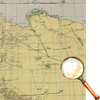
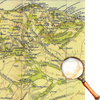 By the late 19th century, Italy had fallen considerably behind other European powers in the acquisition of overseas colonies. As rival empires expanded globally, Italian strategic interest increasingly focused on Tripoli, which occupied a commanding position across the Mediterranean. This ambition intensified following France's occupation of Egypt in 1881 and its annexation of Tunisia and Algeria in 1882, which left Tripoli as the last remaining Ottoman territory in North Africa, and, in Italian eyes, the last unclaimed prize. In the year 1900, a secret agreement was forged between France and Italy, with France setting its sights on Morocco and Italy coveting Tripoli.

From 1902 onwards, Italy began implementing a policy of "peaceful penetration" in Tripoli, creating enterprises financed by Banco di Roma to establish an economic foothold before initiating a full-scale invasion. The Ottoman government, which had only nominal control in Tripoli, exerted significant effort to curb Italian economic expansion, even with some success. The economic development ceased, and Banco di Roma faced financial difficulties, seeking assistance from British and German financiers to cover its debts to shareholders. The bank also urged the government to protect its investments in Tripoli and enhance the value of its land holdings. Banco di Roma had invested about $4-5 million in Tripoli by 1911. Furthermore, the Italian government had set up schools, post offices, sent archaeological expeditions, and encouraged Italians to undertake various initiatives.
The Road to War
- Italy and the Ottoman Empire were allies, but Italy increasingly wanted to seize Tripoli, while Germany worried about Italian expansion.
- In September 1911, Italy accused the Ottomans of threatening Italian citizens in Tripoli, but the Ottoman government denied this and sought a diplomatic solution.
- Italy used the situation as a pretext, blockaded Tripoli, and issued an ultimatum on 28 September 1911 demanding control of the region.
Despite both Italy and the Ottoman Empire being members of the Triple Alliance since 1882, Germany harbored growing unease over Italy's designs on Tripoli, fearing the region could serve as a springboard for broader Italian expansion into areas of German interest. By September 1911, the Tripoli question had become a dominant topic in the Italian press, with public opinion broadly convinced that the Ottoman government had treated Italian nationals unjustly. Amid suspicions of German intrigue, Italy began searching for a pretext for war.

On 23 September 1911, the Italian Ambassador in Istanbul delivered a diplomatic note to the Sublime Porte, accusing Turkish officers in Tripoli of inciting the local population against Italians and thereby endangering their lives. Istanbul firmly rejected this characterization, asserting that no threat existed and that the Ottoman Empire was fully capable of maintaining order within its own territory.

Simultaneously, the Sublime Porte initiated diplomatic efforts to avert a conflict. A cable dispatched to the Ottoman Embassies in London, Paris, and Berlin conveyed a clear message: "Every conceivable effort, even the seemingly impossible, should be made to reach an agreement with Italy. Should they commence hostilities by landing troops or by any other means, we will be confronted with the peril of a severe deterioration in our domestic situation." The Ottoman Ambassador in Rome, Seyfettin Bey, engaged with the Italian Minister of Foreign Affairs, San Giuliano, who left no room for ambiguity. They expected the Ottoman Empire to peacefully vacate Tripoli, and should this not come to pass, Italy would not hesitate to resort to military force.
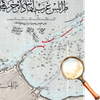 In an attempt to provide support for the Turkish garrison in Tripoli, as an Italian invasion seemed imminent, the Ottoman Chief of Staff decided to dispatch material aid to the province. Escaping the pursuit of Italian warships, the Turkish vessel Derne, loaded with guns and ammunition, arrived in the town of Tripoli on 25 September. The arrival of the Derne offered significant moral support to the local population.

The following day, four Italian warships, Varese, Napoli, Roma, and Garibaldi, blockaded Tripoli. Within a few days, the number of ships on patrol duty would increase to 22. With the Derne's arrival, the Italian government now had the excuse it had been seeking. On 28 September, Italy issued a 24-hour ultimatum to Istanbul, demanding the presence of Italian troops in Tripoli to protect the local Italian population, which then numbered hardly a thousand, with scarcely two hundred having come from Italy.

Simultaneously, the Ottoman Minister of War, Mahmut Şevket Pasha, was sending telegrams to the garrison commander, Colonel Neşet Bey, providing him with instructions on how to respond should the Italians initiate an invasion. While the Sublime Porte was engaged in diplomatic efforts to avert a war, Neşet Bey and his troops were already making preparations for the defense of the region, in consultation with Mahmut Şevket Pasha.
The plan was straightforward. In the event of an invasion, Neşet Bey's initial objective was to attempt to halt the Italian advance at the beachhead. If this proved unsuccessful, new battalions were to be formed using reserves, and a strategy of engaging the enemy in a tactical retreat to Garyan was to be implemented. In this scenario, combat would primarily involve small units rather than a large-scale offensive. The plan also assumed that the Italian landings would occur in Tripoli and Benghazi, without attempts to venture inland. Mahmut Şevket Pasha additionally instructed Neşet Bey to establish contact with the leader of the local Sanusi tribe, who held significant influence over the Muslim population.
The Invasion and Ottoman Defense
- On 29 September 1911, Italy declared war on the Ottoman Empire, with British and French backing, and immediately attacked Ottoman ships before the declaration was announced.
- The Ottoman forces in Tripoli were heavily outnumbered and weakened by multiple regional conflicts, making defense difficult against Italy’s much larger and better-equipped invasion force.
- Italy quickly bombarded and captured key cities in Libya starting with Tripoli in October 1911 while Ottoman forces offered limited resistance and lost control of the region within weeks.
On 29 September 1911, with the backing of the British and French governments and without waiting for the 24-hour ultimatum to run its course, Italy declared war on Turkey. Just two hours prior to this declaration of war, the Italian fleet had sunk two Turkish torpedo boats off Preveza in the Adriatic Sea. Grand Vizier Hakkı Pasha, who had maintained confidence in a peaceful resolution until the very last moment, resigned from his post. He was succeeded by Said Pasha.
The situation in Tripoli was one of utter chaos, and Ottoman authorities struggled to regain control of the city. Local residents were encouraged to join volunteer battalions, but many opted to remain in their homes and defend themselves. There was a severe shortage of weaponry, ammunition, and vehicles. Colonel Neşet Bey found himself in command of only 8,000 ill-equipped men.

On 30 September, an Italian officer landed and sought surrender. Neşet Bey sought guidance from Istanbul on how to respond. Mahmut Şevket Pasha, still hopeful for a diplomatic resolution, believed it was premature to engage in combat. He instructed Neşet Bey to cede some coastal areas to the Italians and withdraw inland without resisting the enemy.
The following day, the Italians demanded the surrender of two Turkish warships anchored in Tripoli, the Derne and the gunboat Seyyad-ı Derya. Instead of relinquishing the vessels to the enemy, their commanders opted to scuttle the two ships. On the same day, Derna came under bombardment, and the cable connecting Tripoli to Malta was severed, cutting off communication with Istanbul.
Admiral Farevelli, the commander of the Italian invasion force, delivered an ultimatum to Neşet Bey on 2 October, requesting the surrender of Tripoli. When this request was rebuffed, Italian naval artillery commenced shelling the city on the following day. Meanwhile, in compliance with Mahmut Şevket's directives, Neşet Bey's forces were in the process of retreating inland. This withdrawal led to disorder in the city, and upon Acting Governor Besim Bey's appeal, Neşet Bey dispatched a few units back to Tripoli to restore order.

Italian troops landed in Tripoli on 5 October, just one day after invading Tobruk, and they encountered little resistance. The occupation of the city was swiftly completed within a day, with Admiral Borea Ricci assuming the role of the new governor and the arrest of Besim Bey. Subsequently, Derna was captured on 16 October, Benghazi on 20 October, and Khoms on 21 October. At that time, the Turkish military presence in Tripoli was significantly weaker compared to the Italian invasion force, consisting of 30,000 troops, 6,000 animals, 103 artillery pieces, 800 trucks, and four airplanes.
The Empire was already grappling with various insurgencies in regions such as Yemen, Macedonia, and Albania. Moreover, the disruption of land routes to Tripoli posed significant logistical challenges, rendering support incredibly difficult, if not unfeasible. Additionally, the Italian navy held a dominant position in the Mediterranean. Meanwhile, the local tribes, who shared the Islamic faith, displayed limited interest in the conflict between the Turks and Italians. The Sanusi tribe, however, offered crucial support to the Turkish resistance. These resistance forces, comprised of Turkish troops and local militia, gathered in Garyan.
The Young Officers and the Resistance
- The Italian invasion sparked resistance among Ottoman officers, with Enver Bey proposing guerrilla warfare and many young officers volunteering to join the struggle.
- Since the Ottoman state could not officially wage full war, officers like Enver Bey and Mustafa Kemal Bey traveled secretly to Libya under false identities to organize resistance.
- These officers strengthened and coordinated local forces, turning scattered fighters into more organized units across Tripoli, Tobruk, and Benghazi.

Simultaneously, a strong reaction was brewing among young Turkish officers against the Italian invasion. They could not reconcile with the fact that a portion of their homeland was under enemy control, compelling them to desire involvement in the Turkish military efforts in Tripoli. Almost immediately after learning of the invasion, Major Enver Bey, who at the time served as the Ottoman military attaché in Berlin, made his way to Salonica. Here, he proposed a battle plan to the Committee of Union and Progress, which entailed the Turkish forces drawing the enemy into the desert and eliminating them through nocturnal raids. Following the acceptance of his proposal, Enver Bey journeyed to Istanbul.

Enver Bey was not alone in his eagerness to journey to Tripoli. A group of officers, including Mustafa Kemal Bey, Eşref Bey, Süleyman Askeri Bey, the military attaché in Paris, Ali Fethi Bey, Major Halil Bey, Major Nuri Bey, Captain Fuat Bey, and Captain Ali Bey, were among those actively seeking ways to reach the region. Back in Istanbul, Enver Bey and Eşref Bey met with Mahmut Şevket Pasha, who conveyed that the Empire could not engage in an all-encompassing war with Italy. Instead, they would attempt to protect the province using local resources. Mahmut Şevket Pasha's counsel to the young officers was to undertake the mission covertly. If the government opted for full-scale warfare, they would receive comprehensive support. However, if diplomacy prevailed, the responsibility would fall squarely on their shoulders.

Enver Bey, accompanied by Rauf Bey and Ömer Fevzi Bey, all under assumed names and posing as reporters, left Istanbul on 1 November. After a two-week journey, they reached Alexandria and departed for Benghazi eight days later, following a brief sojourn in Egypt. Mustafa Kemal Bey set out from Istanbul on 15 November, masquerading as journalist Mustafa Şerif Bey. In Alexandria, he met Nuri Bey and Fuat Bey, and despite the risks associated with potential British capture, they eventually arrived in Tobruk.
The resistance had commenced even before the arrival of the Turkish officers, and it had already yielded successful attacks against the Italians. However, these young officers brought a higher level of coordination to these efforts and promptly began the training and organization of local forces. Alongside the Turkish units already stationed in the region, they proved highly effective in their endeavors. In a later newspaper interview, Enver Bey remarked, "Upon my initial arrival here, I encountered only 900 desert fighters. Now, I command 16,000 trained soldiers." The army they had forged also succeeded in capturing two machine guns, 250 rifles, two artillery pieces, and ammunition from the Italians.
The Role of the Sanusi
- The Sanusi tribe supported the Ottomans, and officers like Mustafa Kemal and Enver Bey organized resistance and early successful attacks.
- Despite Ottoman victories in some battles, Italy annexed Tripoli in November 1911 and reinforced its forces, continuing the war.
Turkish endeavours received substantial support from the Sanusi tribe, led by Ahmed Şerif, who declared a "holy war" against the Italians. Mustafa Kemal Bey was tasked with ensuring and organizing Sanusi participation. Alongside him, the Sanusi had immense trust in Enver Bey, who happened to be the son-in-law of the Caliph.

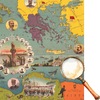 According to the new command structure in Tripoli, Neşet Bey assumed leadership of the forces in Tripoli, Major Mustafa Kemal Bey became the commander in Tobruk, and Major Enver Bey in Benghazi. The first organized attack was initiated on 23 September, when Neşet Bey and Ali Fethi Bey led their troops in a successful offensive against the Italians, resulting in 46 officers and 463 men as casualties on the Italian side.
On 5 November 1911, the Italian government declared the annexation of Tripoli. Istanbul's protests had no effect on altering the course of the war. During the month of November, the Italians managed to recapture some trenches they had previously lost. In the subsequent months, the resistance began to gain the upper hand. Mustafa Kemal's units effectively engaged the Italians in Tobruk and Derna – his units achieved victory in the Battle of Tobruk on 22 December 1911 – while Enver Bey similarly succeeded in Benghazi and Neşet Bey performed admirably in Tripoli. They had succeeded in halting the Italian advance, but they could not compel the Italians to evacuate Tripoli. The Italians received reinforcements, and at one point during the course of the war, their numbers swelled to 100,000.
Naval Operations and the Aegean
- Italy expanded the war by attacking Ottoman positions in Beirut, the Red Sea, and the Dardanelles, while also capturing Rhodes and the Dodecanese Islands.
- Germany tried to mediate in March 1912 but failed to reach any agreement between Italy and the Ottoman Empire.
- Ottoman forces gradually lost ground in Tripoli, though they successfully defended the Dardanelles and forced Italian naval attacks to fail.
As the land war in Tripolitania continued, Italy moved to widen the conflict by deploying its naval power against the Ottoman Empire across multiple fronts. In November 1911, Italy drew up plans to strike the Dardanelles, but abandoned them in the face of firm Russian objections as St. Petersburg depended heavily on the Straits for the passage of its grain exports and refused to countenance their disruption. Instead, Italian warships entered the port of Beirut and sank two Ottoman vessels anchored there. In January 1912, an Italian fleet pushed further still, entering the Red Sea, sinking Turkish ships, and bombarding the Yemeni port of Hudaidah, a province already convulsed by rebellion against Ottoman authority.

Amid the escalating violence, Kaiser Wilhelm II attempted to broker a settlement, meeting with King Vittorio Emanuele III in Venice on 25 March 1912. The talks produced nothing. Italy held the military upper hand and saw little incentive to negotiate, and the meeting quietly dissolved without result.
Italy then acted on its Dardanelles ambitions directly. On 18 April 1912, the Italian navy bombarded the Strait's fortifications, forcing the Ottoman government to close the waterway entirely to naval traffic. The closure immediately disrupted the commerce of Russia, Britain, Greece, Bulgaria, and Romania, and laid bare the enormous strategic sensitivity of the Straits to the wider region. Istanbul reopened them to merchant shipping on 10 May, bowing to intense international pressure.

The expansion of the conflict reached its most dramatic expression in the Aegean. On 5 May 1912, Italian forces landed on Rhodes and, in a swift and largely unopposed campaign, seized all twelve of the Dodecanese Islands within ten days. It was a strategically significant conquest as the islands lay astride vital Ottoman sea lanes and their capture marked a permanent shift in the naval balance of the Eastern Mediterranean.
On the ground in Tripolitania, the war was also turning in Italy's favor. By early June 1912, Ottoman forces had been pushed back from their forward positions and compelled to retreat deeper into the desert interior, while Italian troops consolidated control over the western coastal areas through the summer months. Yet Italian ambitions on the water continued to encounter limits. On 12 July, five Italian warships made a bold attempt to force entry into the Dardanelles, only to be repelled by a formidable combination of steel anti-ship nets and concentrated artillery fire from the Turkish shore batteries, a sharp reminder that despite its setbacks, the Ottoman Empire retained the capacity to defend its most vital strategic chokepoint.
Peace and Its Aftermath
- Peace talks began in August 1912 and ended with the Ouchy Treaty (18 October 1912), which ceded Tripoli to Italy and promised the Dodecanese Islands to the Ottomans, though this was later not honored.
- The Balkan Wars forced the Ottoman Empire to accept the settlement, even though fighting in Libya was still favorable to Ottoman-backed forces and resistance continued locally.
- After delays and confusion over the armistice, Ottoman troops gradually evacuated Tripoli and Benghazi, with the final withdrawal completed in January 1913.
On 13 August 1912, peace negotiations commenced between Turkey and Italy while fighting persisted. The outbreak of the Balkan War and the pressing need for Turkish officers and manpower in other theaters of war forced the Sublime Porte to accept Italy's terms. Consequently, a peace treaty was signed between Italy and the Ottoman Empire in Ouchy, a lakeside district of Lausanne in Switzerland, on 18 October 1912.

According to the Ouchy Treaty, Tripoli was ceded to Italy with autonomous status, but Turkey was to act as the protector of the rights of the Muslims in the region. The Dodecanese Islands were to be returned to the Ottoman Empire at the conclusion of the Balkan Wars. However, the Italians violated the treaty's relevant article and did not return the islands. This incident marked the conclusion of the Ottoman Empire's centuries-long authority in the Aegean Sea.
The war drew to a close when the situation began to favor the resistance. The Italians had managed to advance more than 3-4 kilometers inland, and the fighting was proceeding favorably for the Turks and their local supporters in Tripoli and Benghazi. It was exceedingly challenging for Istanbul to convey to the people in the province that peace had been established, leaving them to determine their own destinies.
"Ah, this Tripoli affair! As I told you, it became a personal matter of honour for me. Do you know that I am guiding the Arabs here towards the Italians with their wives and children? I promise them that even if the Sultan lets them down, I won't. How can I abandon these brave people to the Italians who intend to harm them? God, there are significant difficulties in my country as well. But, no, I do not want to see that the Bedouins are more faithful to the promises they had made than I am. Retracting a word of honour is nothing but cowardice, and besides, the Grand Chief of Sanusi is sending me the message that he will always obey my orders. God, what should I do? War has broken out with Montenegro, and other Balkan states are likely to follow suit due to the problems with Europe. Under these circumstances, what would our issue with Italy mean?" (A letter sent by Enver Bey to a friend of his only a few days before the armistice)

Meanwhile, Neşet Bey remained entirely in the dark about the peace conditions being negotiated in Ouchy. Having received no official communication from Istanbul, he continued to prosecute the war as though no settlement were imminent. The local population, for their part, found themselves in a deeply unsettling limbo. They had fought alongside the Ottomans, placed their trust in Turkish officers, and now faced an uncertain future under Italian rule with little clarity about what protections, if any, the treaty afforded them. Enver Bey, acutely aware of the moral weight of the situation, initiated urgent communications with Istanbul, warning that the resistance in the field would not simply dissolve at the stroke of a pen. He was not a man inclined to abandon those who had fought under his command, and his letters from this period reflect a profound personal conflict between duty to the state and loyalty to the people he had led.

The Sanusi leadership, too, made their displeasure with the armistice unmistakably clear. Ahmed Şerif and his followers had not declared holy war against the Italians merely as a gesture of solidarity with Istanbul, they had done so to defend their land, their faith, and their way of life. A negotiated peace concluded in a Swiss lakeside town, without their knowledge or consent, carried little legitimacy in their eyes. For the Sanusi, the war was far from over.
The evacuation of Tripoli and Benghazi, which formally commenced in December 1912, proved to be a protracted and deeply complicated affair. The communication channels between Istanbul and the commanders in the field were chronically unreliable, resulting in confusion over the terms of withdrawal, its timing, and its scope. Some Turkish commanders, unwilling to accept defeat, resisted the order to stand down, and local militia units who had no intention of simply laying down their arms added further friction to an already fraught process.
The Ottoman government faced the painful and politically delicate task of compelling its own officers to leave a province they had bled to defend. Before departing, however, those officers took deliberate steps to ensure that the struggle might continue in some form after their departure: weapons, ammunition, and supplies were quietly left behind, intended for the Sanusi, who it was widely understood would carry on resisting Italian authority long after the last Turkish soldier had gone. The evacuation dragged on through the winter months, slowed at every turn by logistical inefficiency, emotional resistance, and the sheer difficulty of extricating a military presence from a territory where loyalty ran deep. The final contingent of Ottoman forces, among them Neşet Bey himself, who had commanded the defense of Tripoli from the first days of the invasion, departed the province on 15 January 1913, bringing to a close over four centuries of Ottoman rule in North Africa.
Military Firsts and Historical Legacy
- The war saw early aviation milestones, including the first reconnaissance flight, first aerial bombing, and first photo-reconnaissance mission carried out by Italian pilots.
- It also marked early anti-aircraft warfare, including the first aircraft shot down in combat and the first captured aircraft by Ottoman forces.

The Turco-Italian War witnessed several milestone events in military history. In Tripoli, Italy mobilized its Italian Aviation Battalion under the command of Captain Carlo Piazza, a renowned racing pilot. On 23 October 1911, Piazza made history's first reconnaissance flight near Benghazi in a Blériot XI aircraft. Then, on 1 November 1911, Second Lieutenant Giulio Gavotti carried out the world's first aerial bombardment mission, dropping four bombs on two Turkish-held oases. In March 1912, Captain Piazza conducted the first-ever photo-reconnaissance flight in history.
The Ottoman forces, for their part, responded to this new threat with a resourcefulness that earned its own place in the annals of military history. Lacking any dedicated anti-aircraft weaponry, Turkish soldiers adapted their rifles and field guns to fire at attacking aircraft, conducting, in doing so, the world's first recorded anti-aircraft operation. It was a testament to both the novelty of the situation and the ingenuity of those confronting it.

Their efforts were not without result. On 25 August 1912, Lieutenant Piero Manzini's aircraft was brought down by ground fire, becoming the first plane ever to be shot down in combat. Weeks later, on 10 September 1912, Captain Moizo's aircraft was forced down and captured intact, the first time in history that an enemy aircraft had been seized as a prize of war. In the span of barely a year, the skies above the Libyan desert had become the stage for a series of events that fundamentally altered humanity's understanding of what war could be. The conflicts that followed, from the Balkan Wars to the catastrophe of the First World War, would inherit and vastly expand upon every lesson learned in that remote and unforgiving theater.
The Turco-Italian War of 1911-12 marked the initial conflict in a series of wars spanning over a decade that ultimately contributed to the decline of the Ottoman Empire. While it showcased the emergence of a new generation of young officers, it also revealed the Empire's weakness in conducting a large-scale war, with its Navy lacking the capacity to play a decisive role. This weakness provided the impetus for Russia and the Balkan States to trigger subsequent conflicts. Furthermore, it signified the first instance in which the Ottoman Empire lost a territory predominantly inhabited by Muslims. The Turco-Italian War significantly influenced both Turkish and Italian domestic politics. Notably, the roots of Arab nationalism can be traced back to Tripoli during this period.

PAGE LAST UPDATED ON 16 DECEMBER 2023