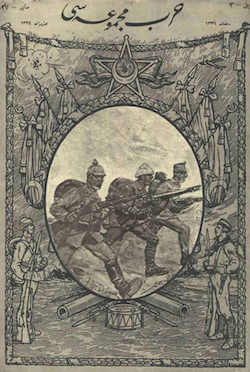
 The formal foundation of the Ottoman-German alliance was laid on 2 August 1914, just one day after Germany declared war on Russia, and two days before Britain entered the conflict. The secret treaty signed on that date bound the Ottoman Empire to the German side should Russia intervene in the Austro-Serbian war, which by then was already a foregone conclusion. Yet the treaty was far less a product of sudden diplomatic maneuvering than the culmination of years of deepening military, economic, and political entanglement between Berlin and Istanbul. To understand how the alliance took shape in the summer and autumn of 1914, one must examine the layers of German influence that had already been woven into the fabric of the Ottoman state, the dramatic naval episode that effectively sealed Ottoman commitment, the fierce internal debate within the Ottoman leadership, and finally the provocative act that brought the empire into open belligerence.
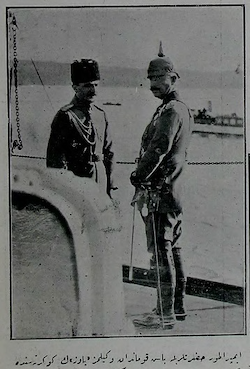
Long before the guns of August, Germany had established itself as the dominant foreign military power within the Ottoman Empire. The relationship had been cultivated deliberately over decades, most visibly through the German Military Mission, a program through which German officers were embedded in the Ottoman army to train, reorganize, and modernize its forces. This mission was not merely advisory in character, German officers held actual command positions and shaped Ottoman military doctrine from within. The capstone of this process was the appointment of General Otto Liman von Sanders in December 1913 to command the First Ottoman Army Corps based in Istanbul itself. The appointment caused an international uproar. Russia, acutely sensitive to any foreign power gaining strategic control over the Bosphorus, protested vigorously through formal diplomatic channels in January 1914, and the affair briefly threatened to become a major diplomatic crisis. A compromise was eventually reached by mid-January, Liman von Sanders was elevated to the ceremonial rank of a field marshal in the Ottoman army, nominally removing him from direct corps command, but the episode revealed just how deeply Germany had penetrated the Ottoman military establishment, and how raw the nerves of the great powers were over the empire's fate.
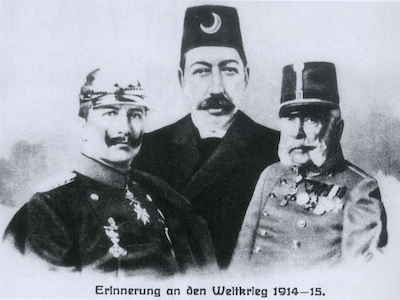
The significance of this pre-war entanglement for the 1914 alliance cannot be overstated. When war came, Germany did not need to build influence in Istanbul from scratch. The infrastructure of cooperation, personal relationships between German and Ottoman officers, familiarity with Ottoman military organization, and institutional trust, was already in place. The Ottoman army, weakened by the catastrophic Balkan Wars of 1912–13 in which it had lost nearly all of its European territories, was desperate for modernization and external support. Germany, for its part, saw the Ottoman Empire as a strategic asset of enormous potential: a state straddling three continents, controlling the Straits, and capable, at least in theory, of threatening British and Russian imperial interests from multiple directions. The pre-war military relationship thus created a powerful gravitational pull toward formal alliance when the European crisis erupted in late July 1914.
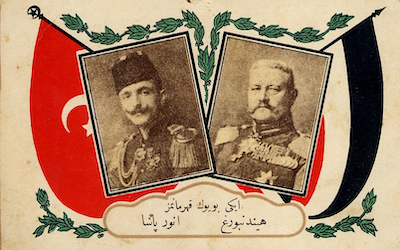
The secret treaty itself was a remarkably compact and hastily drafted document, negotiated primarily by the Ottoman Grand Vizier Said Halim Pasha and the German ambassador Hans von Wangenheim, with the driving force on the Ottoman side coming from Enver Pasha, the Minister of War and arguably the most powerful figure in the ruling Committee of Union and Progress (CUP). Negotiations had been initiated as early as 22 July 1914, the very day Austria-Hungary delivered its ultimatum to Serbia, reflecting the speed with which Enver moved to secure German backing as the European crisis accelerated toward war. The treaty stipulated that if Russia intervened in the Austro-Serbian conflict, the Ottoman Empire would enter the war on Germany's side. In exchange, Germany pledged to defend Ottoman territorial integrity and support revision of the humiliating capitulations, the extraterritorial privileges enjoyed by European nationals on Ottoman soil that had long been a source of national grievance.
Several features of the treaty are worth noting. First, it was kept secret not only from the Entente powers but also from most of the Ottoman cabinet, reflecting the degree to which a small inner circle of the CUP, particularly Enver, Talat, and Cemal Pasha, had concentrated decision-making power in their own hands. Second, the treaty did not obligate the Ottomans to enter the war immediately; it provided for a period of "armed neutrality," giving Istanbul room to maneuver and extract further concessions. Third, the German side was under no illusions that the Ottomans were a fully reliable or militarily capable partner, what Germany primarily wanted was Ottoman belligerence as a geopolitical fact, regardless of actual battlefield performance. The Straits would be closed to Entente shipping, Russia's southern flank would be threatened, and the symbolic weight of the Ottoman Caliph's religious authority could potentially be mobilized against Britain and France's vast Muslim colonial populations.
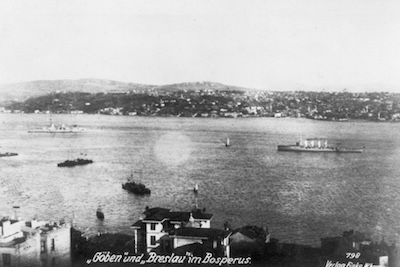
If the secret treaty was the legal architecture of the alliance, the episode of the Goeben and Breslau was its dramatic catalyst, a naval incident that did more to bind the Ottomans to Germany than any diplomatic text. The SMS Goeben was a powerful German battlecruiser and the SMS Breslau a light cruiser, both operating in the Mediterranean under the command of Rear Admiral Wilhelm Souchon when war broke out. On 3 August 1914, the two ships shelled the French North African ports of Bône and Philippeville before turning eastward. Pursued by the British Royal Navy and unable to return to German-controlled waters, Souchon made the bold decision to sail for Istanbul. The British, fatally hesitating to fire on the ships in neutral waters, allowed both vessels to slip through the Dardanelles on 10 August 1914, and into the Sea of Marmara.
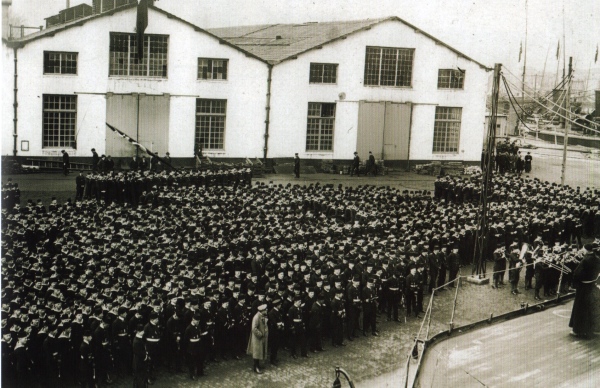
What followed was a masterstroke of diplomacy. To avoid the international complications of having German warships in a neutral Ottoman port, the two vessels were formally "sold" to the Ottoman navy on 16 August 1914. The Goeben was renamed Yavuz Sultan Selim and the Breslau became the Midilli. German sailors donned Ottoman fezzes, and Souchon himself was appointed commander of the Ottoman fleet. In reality, of course, the ships remained under German operational control. The fiction of the sale was transparent to everyone, but it served its purpose, as it gave the Ottoman government a face-saving way to incorporate the ships and deepened the military integration between the two powers at a critical moment. More concretely, the Goeben's presence dramatically shifted the naval balance in the Black Sea against Russia, giving the Ottoman-German side a powerful modern warship that the Russian fleet could not match. It was a gift that carried enormous strategic implications, and it created a dynamic in which Souchon and the German naval command would soon push the Ottomans toward open war.
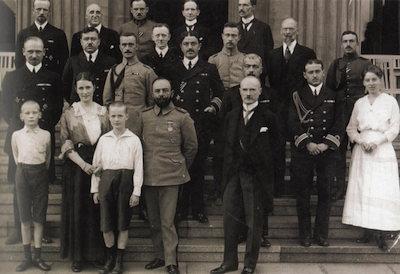
Despite the secret treaty and the Goeben affair, Ottoman entry into the war was neither automatic nor inevitable in the weeks that followed. The empire remained officially neutral through August and into the autumn, and within the CUP leadership a genuine and sometimes fierce debate unfolded over whether to enter the war at all, and if so, on which side. The Three Pashas were not of one mind. Enver Pasha was the most ardently pro-German, convinced that the Central Powers would win swiftly and that alliance with Germany offered the best chance of territorial recovery. Cemal Pasha harbored sympathies for France and Talat Pasha, the most pragmatic of the three, was primarily concerned with Ottoman survival and national consolidation, and was willing to consider whichever alignment best served that end.
Beyond the inner circle, significant voices counseled caution. Many Ottoman statesmen and military figures remembered the catastrophe of the Balkan Wars and were deeply reluctant to plunge a weakened empire into another major conflict. The financial and military state of the country was dire: the treasury was nearly empty, the army was still recovering and re-equipping after 1912–13, and large portions of the Anatolian population were exhausted. There were also those who calculated, not unreasonably, that continued neutrality might allow the Ottomans to play the great powers off against one another and extract maximum concessions without firing a shot. Britain, in fact, had been actively courted by some Ottoman figures, as recently as July 1914, the Ottomans had approached London about a possible defensive alliance, but London's responses were consistently lukewarm, and Britain's seizure on 3 August 1914 of two Ottoman battleships then under construction in British shipyards, the Sultan Osman I and the Resadiye, whose cost had been funded in part by public subscription across the empire, caused enormous popular outrage in Istanbul and powerfully reinforced the hand of the pro-German faction.
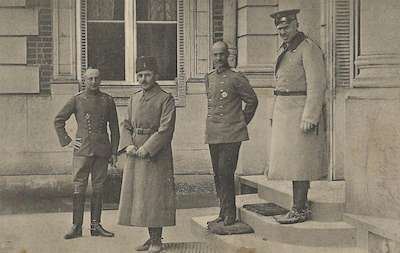
Germany, meanwhile, was pressing hard for Ottoman action. Wangenheim and Enver worked closely together to overcome resistance, and in late September and early October 1914, Germany dispatched a substantial gold loan, amounting to five million Turkish lira, to Istanbul to tip the balance. The debate within the CUP thus reflected the empire's deeper structural dilemma: it was too weak to fight confidently, yet potentially too strategically exposed to afford permanent neutrality if the war reshaped the European order without Ottoman participation.
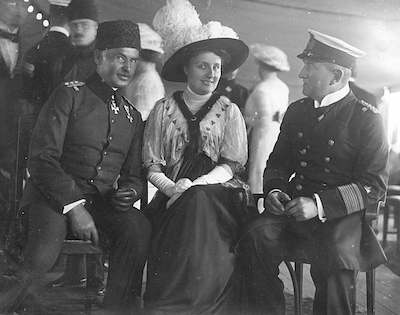
The period of ambiguity was brought to an end not by a formal political decision but by a deliberate act of provocation engineered by Enver Pasha and the German naval command. On 29 October 1914, the Ottoman-German fleet under Admiral Souchon sailed into the Black Sea and attacked Russian ports, shelling Sevastopol, Odessa, Feodosiya, and Novorossiysk, sinking a Russian minelayer and damaging several vessels. The operation, which Enver had authorized on 25 October while keeping other cabinet members in the dark, was designed to make Ottoman neutrality impossible and to confront the wavering leadership with a fait accompli. Russia responded by declaring war on 2 November, followed by Britain and France on 5 November 1914.
The reaction within the Ottoman cabinet was one of shock and fury for those who had not been informed. Several ministers resigned in protest on 4 November, including the Ministers of Finance and Public Works, and the Grand Vizier Said Halim Pasha himself briefly threatened to step down before being persuaded to remain. But the deed was done. The Ottoman Empire formally declared a state of war on 11 November 1914, and the secret alliance of August had become an open belligerency. The manner in which entry was achieved, through the manipulation of a small conspiratorial clique, in coordination with a foreign power's naval commander, set an ominous tone for the alliance that would follow. From its very first active moment, the partnership was characterized by German initiative, Ottoman internal division, and a troubling blurring of the line between allied cooperation and foreign manipulation of Ottoman sovereignty.
The alliance that emerged in the autumn of 1914 was thus shaped by a paradox that would define it throughout the war: it was simultaneously a relationship that the Ottoman leadership had actively chosen and one that had been, to a significant degree, engineered for them. Germany had cultivated the ground for years, provided the naval gift that tipped the strategic calculus, bankrolled the hesitant leadership, and ultimately orchestrated the act of war itself. The Ottomans, for their part, had their own ambitions and grievances that made the alliance genuinely appealing to key figures, but the terms of the partnership, the pace of entry, and the mechanisms by which it was consummated already contained the seeds of the asymmetry and resentment that would increasingly define the relationship as the war ground on.
The Strategic Logic of the Partnership
With the Ottoman Empire formally at war by the first days of November 1914, the alliance that had been secretly constructed over the preceding months now had to be translated into operational reality. The two powers were bound together by treaty and by the act of war itself, but the question of what each actually hoped to achieve, and how those hopes aligned or conflicted with the other's, was one that would shape every dimension of their cooperation from the outset. The strategic logic underpinning the partnership was, in truth, a dual logic: two distinct sets of war aims, rooted in two very different imperial traditions and existential predicaments, which overlapped sufficiently to make the alliance functional but diverged enough to ensure that it would always be contested from within. Understanding that dual logic, and the early military and ideological initiatives through which it was expressed, is essential to grasping both the genuine potential the alliance held in its first year and the structural reasons why that potential was so imperfectly realized.
From the German perspective, the Ottoman Empire's value as an ally was primarily instrumental. Berlin was not deeply invested in Ottoman territorial integrity or the long-term survival of the Sultanate as ends in themselves, what it sought was the conversion of Ottoman geography, manpower, and religious authority into concrete strategic pressure on its enemies. This vision operated on several distinct levels simultaneously.

The most immediately important was the closure of the Black Sea Straits. With the Ottoman entry into the war in early November 1914, the Bosphorus and Dardanelles were shut to Entente shipping, effectively severing Russia's most viable route for receiving war supplies from its Western allies and for exporting the grain that financed its war effort. Russia's southern ports, Odessa, Sevastopol, Novorossiysk, were now cut off from the Mediterranean. This single consequence of Ottoman belligerence imposed an enormous strategic burden on Russia, forcing supplies to be routed through the distant and ice-bound port of Archangel in the north, a route that became operational only in the autumn of 1914, or through the long overland route through Vladivostok in the east. The logistical strain this created on the Russian war economy was significant and, as the war progressed, increasingly crippling. In German strategic calculations, closing the Straits alone justified the effort and expense of cultivating the Ottoman alliance.
Beyond the Straits, Germany envisioned the Ottoman Empire as a platform for threatening British imperial power at its most vulnerable points. The Suez Canal, through which the bulk of Britain's communications with India and the Far East flowed, was a natural target. An Ottoman offensive across the Sinai Peninsula toward Egypt could, if successful, sever this artery and force Britain to divert enormous resources to its defense. Further east, Ottoman influence in Persia and Afghanistan, combined with German diplomatic activity in those regions, held out the prospect of destabilizing the northwestern frontier of British India, a prospect that haunted the British imperial imagination and had done so since the days of the Great Game. In November 1914, Germany dispatched a mission under diplomat Wilhelm Wassmuss to Persia with the aim of fomenting tribal uprisings against British interests, and in the following months further expeditions were sent toward Afghanistan in an attempt to bring the Emir into the war on the Central Powers' side. Germany threw considerable energy and resources into this peripheral strategy, though its practical results would prove consistently disappointing.
Jihad and the mobilizing of pan-Islamic sentiment

The most ambitious and ideologically charged element of Germany's Ottoman strategy, however, was the project of mobilizing pan-Islamic sentiment against the Entente powers. Britain, France, and Russia together ruled over the vast majority of the world's Muslim population, in India, Egypt, North Africa, Central Asia, and beyond. If the Ottoman Sultan-Caliph, as the symbolic head of Sunni Islam, could be persuaded to declare a holy war against these Christian imperial powers, the consequences, in German strategic fantasy, might be revolutionary: mass uprisings in Egypt, mutinies in the Indian army, revolts across French North Africa. Germany had been cultivating this idea for years before the war, and it found a receptive audience among those in the CUP who saw pan-Islamic solidarity as a potential instrument of Ottoman revival.
The declaration of jihad, holy war, against the Entente powers, issued by the Sheikh-ul-Islam in Istanbul on 14 November 1914, was the most dramatic early expression of this pan-Islamic strategy and the clearest example of German ideological ambition being translated into Ottoman political action. The declaration, which followed the Ottoman Sultan Mehmet Reşad’s formal proclamation of holy war on 11 November, called upon Muslims everywhere to take up arms against Britain, France, and Russia, framing the conflict as a religious struggle for the defense of Islam against Christian imperialism. Germany had actively encouraged and helped craft the declaration, the orientalist Max von Oppenheim, who had been advocating a pan-Islamic strategy from within the German Foreign Office since at least 1914, played a central role in its ideological preparation, and Berlin greeted it with considerable excitement, anticipating that it would set the Muslim world ablaze.
The results were, to put it mildly, disappointing. The jihad declaration produced almost no significant uprisings or defections among the Muslim subjects of the Entente powers. Indian Muslim soldiers continued to serve loyally in the British army, and would do so throughout the war, including at Gallipoli, where they fought against Ottoman troops. French North African soldiers remained in the ranks of the French army. The Egyptian population did not rise against British occupation. The reasons for this failure were multiple and instructive. The religious authority of the Ottoman Caliphate, while symbolically important, was far weaker in practice than German strategists had assumed, the Sultan-Caliph's ability to command the political loyalty of Muslims living under other sovereignties was not a reliable military instrument. Moreover, the declaration was immediately and fatally undermined by the fact that the Ottoman Empire's own allies included the Austro-Hungarian Empire, which also ruled over millions of Muslims in the Balkans, a contradiction that was not lost on observers. The Entente powers, for their part, worked quickly to counter the declaration through their own propaganda and religious networks, and managed to contain its impact with relative effectiveness.
The jihad episode was revealing not only for its failure but for what that failure suggested about the wider strategic partnership. Germany had invested heavily in an idea, the weaponization of Islam, that was built on a fundamental misunderstanding of how religious identity and political loyalty actually operated in the Muslim world. The Ottomans had gone along with the declaration partly out of genuine ideological sympathy and partly because German pressure and financial inducements made it difficult to refuse, but many within the CUP were privately skeptical of its practical value. The divergence between German strategic fantasy and Ottoman political realism was visible here in embryonic form, a pattern that would recur in more consequential ways as the war progressed.
If Germany's strategic logic was primarily about using the Ottomans as a lever against its enemies, the Ottoman leadership's calculus was altogether more complex, more ideologically charged, and more deeply rooted in the specific trauma of the empire's recent history. For Enver Pasha and the CUP inner circle, the war was above all an opportunity, perhaps the last available, to reverse the catastrophic losses of the preceding decade and to redefine the Ottoman state on terms that would ensure its survival and revival.
The most immediate and concrete Ottoman war aim was territorial recovery. The Balkan Wars had been a national humiliation of staggering proportions, stripping the empire of Thrace, Macedonia, and its remaining European possessions by the Treaty of London of 30 May 1913 and the subsequent Treaty of Bucharest of 10 August 1913. Beyond the Balkans, the CUP harbored ambitions to recover Egypt and the British-occupied territories of the Nile Valley, to reassert influence in the Persian Gulf against British encroachment, and, most ambitiously, to expand eastward into the Caucasus and Central Asia toward the Turkic-speaking populations of the Russian Empire. This last ambition, the pan-Turanian vision of uniting the Turkic peoples under Ottoman leadership, was particularly dear to Enver Pasha, who dreamed of a great Turkic empire stretching from Istanbul to the borders of China. It was a grandiose vision with little grounding in military or logistical reality, but it exercised a powerful hold on Enver's imagination and would drive some of the most costly and strategically incoherent Ottoman operations of the war.
Equally important, though less dramatic, was the Ottoman aspiration to finally abolish the capitulations, the system of legal and economic privileges that had granted European nationals on Ottoman soil exemption from Ottoman law, control over Ottoman customs tariffs, and a degree of extraterritorial sovereignty that deeply humiliated Ottoman nationalists and stifled economic development. In a significant early assertion of sovereignty, the Ottoman government unilaterally abolished the capitulations on 9 September 1914, even before formally entering the war, a move that Germany quietly accepted despite the protests of other European powers. The alliance with Germany offered the prospect of entering a postwar settlement strong enough to make this abolition permanent and to restore full Ottoman sovereignty over its own territory and economy. This aspiration gave the CUP leadership a genuine ideological stake in the alliance and in the outcome of the war that went beyond mere territorial calculation.
Ottoman ambitions and early military realities

The translation of these strategic visions into military action required a degree of organizational and logistical coordination that neither power found easy to achieve. Germany moved quickly to deepen its military presence in the Ottoman Empire following the formal entry into the war, dispatching additional officers, technical specialists, and supplies through the overland route via Romania and Bulgaria, the direct rail connection through the Balkans was not yet fully operational, as the vital section of the Berlin-to-Baghdad Railway through the Taurus and Amanus mountain ranges in Anatolia remained incomplete. By early 1915, the German military mission in the Ottoman Empire had grown to encompass several hundred officers and specialists, embedded at multiple levels of the Ottoman military hierarchy and serving as advisors, chiefs of staff, and in some cases operational commanders alongside their Ottoman counterparts.
This integration produced a military establishment that was hybrid in character and often uncomfortable in practice. Language barriers created persistent difficulties; many German officers had little or no Turkish, and interpreters were frequently inadequate to the demands of complex operational planning. Cultural and professional friction was endemic, German officers frequently regarded their Ottoman counterparts with poorly concealed condescension, complaining in their dispatches and private correspondence about what they perceived as fatalism, indiscipline, and organizational incompetence, while Ottoman officers resented the implicit hierarchy that placed German advisors in positions of de facto authority over their own army. These tensions were manageable in the early months of the war, when the novelty of the alliance and the excitement of initial operations kept them submerged, but they would become increasingly corrosive as the war ground on and military setbacks provided ready material for mutual recrimination.
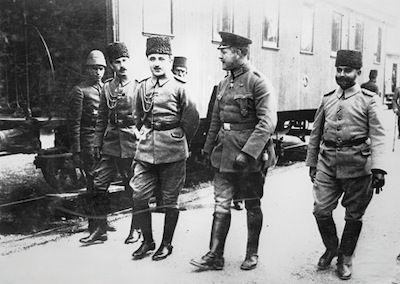
The most significant early military test of the alliance's strategic logic was the Ottoman offensive in the Caucasus, launched in December 1914 under the personal command of Enver Pasha. The campaign was driven primarily by Enver's pan-Turanian ambitions and his desire for a dramatic early victory that would validate the decision to enter the war. The operational plan, modeled loosely on the German encirclement doctrines Enver had studied during his time as military attaché in Berlin, called for an ambitious double envelopment of Russian forces in the Caucasus, aiming to capture the fortress city of Kars and potentially drive deep into the Russian-held Caucasian interior, opening the path toward the Turkic-speaking populations beyond.
The campaign ended in catastrophe. Beginning on 22 December 1914, Ottoman forces pushed into the mountains around Sarıkamış in brutal winter conditions. By 2 January 1915, Russian counterattacks had encircled the Ottoman Third Army's main striking force, and by 17 January the battle was effectively over. Of the approximately 90,000 men Enver committed to the offensive, the great majority were killed, wounded, captured, or lost to frostbite and disease, some estimates suggest that as few as 18,000 men returned to Ottoman lines in any fighting condition. It was one of the most devastating military defeats in Ottoman history, and it left the Caucasian front dangerously exposed. German advisors on the scene, including the experienced Colonel Felix Guse who served as chief of staff to the Third Army, had harbored serious reservations about the operational plan from the outset, and the disaster vindicated their skepticism, but it also poisoned the relationship between German military counsel and Ottoman command, as Enver deflected responsibility and the two sides began the pattern of mutual blame-shifting that would characterize the alliance's military relationship for the rest of the war.
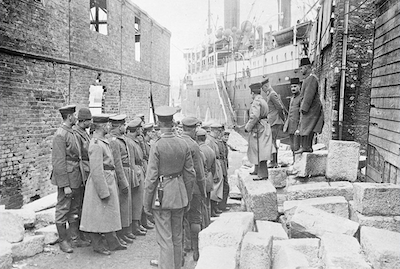
The Caucasus catastrophe was also significant for what it revealed about the gap between Ottoman strategic ambition and Ottoman military capacity. Enver's pan-Turanian vision required the kind of sustained, logistically supported offensive warfare that the Ottoman army in its current state was simply incapable of conducting. The mismatch between the CUP's imperial aspirations and the empire's actual military and economic resources was not merely a problem of planning or leadership, it was a structural condition rooted in decades of underdevelopment, financial exhaustion, and institutional decay. Germany could provide advisors, weapons, and money, but it could not conjure the industrial base, the transport infrastructure, or the trained manpower that modern offensive warfare demanded. The Caucasus campaign thus served, in its first terrible winter, as a preview of the alliance's central and ultimately fatal contradiction: two powers pursuing ambitious war aims with instruments that were, in different ways, inadequate to the task.
By the end of 1914 and into the early months of 1915, the strategic logic of the Ottoman-German partnership had been articulated clearly enough, in treaty commitments, in the jihad declaration, in the closure of the Straits, and in the opening of new fronts, but its limits had also been exposed with brutal clarity. Germany's vision of the Ottomans as a strategic weapon capable of threatening the British Empire and revolutionizing the Muslim world had collided with the realities of Ottoman military weakness and the unpredictability of pan-Islamic politics. The Ottoman vision of the war as a vehicle for imperial recovery and national revival had already suffered its first catastrophic setback in the snows of the Caucasus. What both powers shared, as they entered 1915, was the need to find a way to make the alliance work in practice, and it was in the crucible of that year's dramatic campaigns, above all at Gallipoli, that the partnership would face its most critical early test.
The Alliance Under Strain
If the opening months of the war had revealed the gap between the alliance's strategic ambitions and its operational realities, the years 1915 and 1916 brought that gap into sharper and more painful relief. These were the years in which the Ottoman-German partnership faced its most severe early tests, years in which a combination of military crisis, logistical dysfunction, moral catastrophe, and deepening personal friction began to corrode the cooperative spirit that had animated the alliance in its first hopeful months. And yet they were also years of genuine, if costly, military achievement; above all at Gallipoli, where Ottoman arms won their most celebrated victory of the war and demonstrated that the empire retained a capacity for fierce and effective resistance that its enemies had fatally underestimated. The paradox of 1915–16 is precisely this coexistence of resilience and strain, a partnership that could produce remarkable results under certain conditions while simultaneously consuming itself through internal contradictions that no battlefield success could resolve.
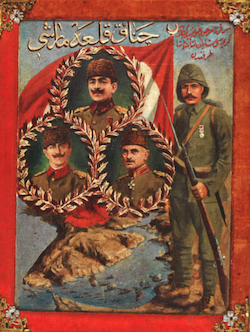
The Gallipoli campaign of 1915 stands as the defining military episode of the Ottoman war experience and one of the most consequential battles of the First World War as a whole. The Entente's decision to force the Dardanelles and knock the Ottoman Empire out of the war, thereby reopening the supply route to Russia, relieving pressure on the eastern front, and potentially unraveling the entire Central Powers coalition from the southeast, represented the most serious direct threat to the Ottoman state in the entire conflict. Had it succeeded, the war might have taken a fundamentally different course. That it failed, and failed so comprehensively, was a result that carried enormous consequences for the alliance, for the Ottoman Empire, and for the broader trajectory of the war.
The naval assault on the Dardanelles began on 19 February 1915, with British and French warships bombarding the outer forts at the entrance to the Straits. The attack was pressed with increasing intensity through February and into March, culminating in the major naval assault of 18 March 1915, when a combined Anglo-French fleet of eighteen battleships attempted to force the Narrows. The operation ended in disaster for the Entente: three battleships were sunk and three others seriously damaged, largely by mines, and the naval commanders concluded that the Straits could not be forced without a land assault. The failure of the naval attack gave the Ottoman and German defenders, including the German naval officer Guido von Usedom, who commanded the Dardanelles fortifications, critical weeks to reinforce their positions before the inevitable amphibious landing.

That landing came on 25 April 1915, when British and imperial forces went ashore at Cape Helles on the tip of the Gallipoli Peninsula, while Australian and New Zealand troops landed at what became known as Anzac Cove further up the Aegean coast. A French force simultaneously staged a diversionary landing at Kumkale on the Asian shore. It was here, in the chaotic and brutal fighting that followed, that the alliance's military relationship produced one of its most complex and contested episodes. General Liman von Sanders, appointed on 24 March 1915 to command the newly formed Ottoman Fifth Army responsible for the defense of the Dardanelles zone, has historically received considerable credit for the successful defense, his rapid redeployment of reserves on the night of 24–25 April and his correct anticipation of the landing sites at critical moments were genuine contributions to Ottoman strategic success. Yet the battle also produced the most celebrated Ottoman military hero of the entire war in the person of Lieutenant Colonel Mustafa Kemal, commanding the 19th Division, whose inspired and ferociously determined defense of the heights above Anzac Cove, most famously at Conkbayırı (Chunuk Bair) on 8 August and in the brutal fighting around Bombatepe (Hill 60) in late August 1915, was the decisive human factor in halting the Allied advance at its most critical moments.
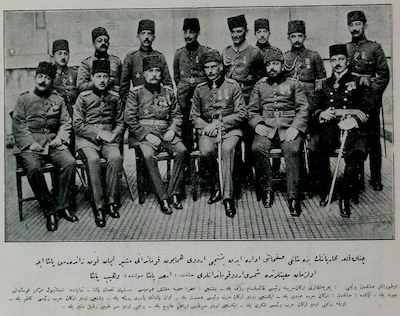
The relationship between Liman von Sanders and Mustafa Kemal at Gallipoli encapsulated many of the tensions of the broader alliance. Mustafa Kemal was contemptuous of German command authority and repeatedly clashed with his superiors, both Ottoman and German, over operational decisions, at times acting on his own initiative in ways that technically violated his orders but proved militarily decisive. His famous order to his troops on 25 April, that they should not merely fight but die in order to give reinforcements time to arrive, and that those who died would have given their lives for something larger than themselves, became the defining legend of Ottoman military valor in the war. The victory at Gallipoli was, in a profound sense, an Ottoman victory achieved through Ottoman sacrifice and Ottoman leadership at the critical tactical level, even if German operational command provided the broader framework within which it occurred. This distinction mattered enormously to Ottoman national consciousness and fed a growing sentiment that the empire's military achievements were being appropriated and overshadowed by its German allies.
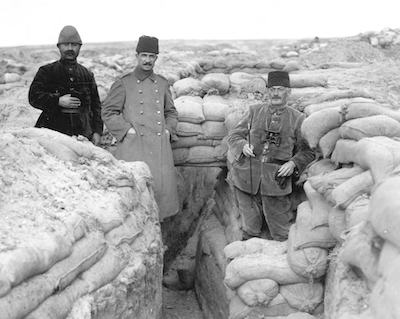
The strategic consequences of the Gallipoli victory were significant but ultimately insufficient to transform the alliance's overall position. Following the failure of a major Allied offensive in August 1915, which included the landings at Suvla Bay on 6–7 August, designed to outflank the Ottoman position but ultimately bogged down through hesitant British generalship, the Entente began a phased evacuation of the peninsula. The Anzac and Suvla positions were evacuated on the night of 19–20 December 1915, and Cape Helles on the night of 8–9 January 1916, in what proved, ironically, to be among the most skillfully executed operations of the entire campaign. The supply route to Russia remained closed, and the Entente's southeastern strategy lay in ruins, Winston Churchill, its principal architect, had already been driven from office in May 1915 in the wake of the naval failure. But the Ottoman army had paid an enormous price in casualties that it could ill afford, losses on the Gallipoli front are estimated at around 250,000 men killed, wounded, or taken prisoner, and the fundamental problems of military capacity, supply, and coordination that had been exposed in the Caucasus remained entirely unresolved.
A major and morally troubling dimension of the German–Ottoman alliance in 1915 was the mass deportation of the Armenian population, which the Ottoman government carried out from spring through autumn of that year. This process led to the deaths of hundreds of thousands through executions, forced marches, starvation, and exposure, and it unfolded under the shadow of the alliance while also implicating Germany in difficult ways.
The deportations were driven by wartime insecurity, ethno-nationalist thinking, and the crisis created by Russian advances in the Caucasus after the Sarıkamış defeat. The process began on 24 April 1915 with the arrest and deportation of Armenian leaders in Istanbul, followed in May by the Tehcir (Deportation) Law, which authorized the removal of Armenians from eastern Anatolia. Deportees were sent mainly toward the Syrian desert, especially Deir ez-Zor, where conditions and deliberate violence made survival extremely difficult.
German military and diplomatic representatives were present and aware of what was happening. Some German officers were involved in Ottoman units linked to the deportations, while diplomats reported the scale and nature of the atrocities to Berlin. Although German ambassadors raised concerns, their protests remained limited and were ultimately subordinated to alliance considerations, with one ambassador even being recalled after pressing the issue too strongly.
Overall, Germany’s response is portrayed as largely limited and cautious, shaped by the priority of maintaining the alliance under wartime conditions. While concerns were raised and some diplomatic pressure was applied, these efforts remained inconsistent and were not accompanied by sustained or decisive intervention. As a result, the episode highlights the extent to which strategic imperatives tended to dominate decision-making within the alliance, often leaving moral considerations in a secondary position.
While Gallipoli dominated the strategic headlines of 1915, the Mesopotamian front, stretching from the Persian Gulf up the Tigris and Euphrates river valleys toward Baghdad, presented a different kind of challenge and revealed different dimensions of the alliance's difficulties. The British had landed forces at Basra on 22 November 1914, ostensibly to protect the Anglo-Persian oil pipeline that supplied the Royal Navy, and had subsequently pushed northward with a boldness that initially outpaced Ottoman resistance. By September 1915, British forces under General John Nixon had captured Kut-al-Amara, and in October Nixon ordered General Charles Townshend to advance further toward Baghdad. By 22 November 1915, Townshend's force had pushed as far as Ctesiphon, within striking distance of the city, before being repulsed in a bloody two-day engagement against a reinforced Ottoman position and forced into a long retreat back down the Tigris.

The retreat ended on 3 December 1915 when Townshend's battered force of approximately 13,000 men took refuge in Kut-al-Amara and was promptly surrounded by Ottoman forces under the command of Halil Pasha, with the German Field Marshal Colmar von der Goltz, one of the architects of the pre-war German Military Mission, serving as overall commander of the Ottoman Sixth Army in Mesopotamia. Three successive British relief attempts, launched between January and March 1916, failed to break through the Ottoman lines. Von der Goltz died of typhus on 19 April 1916, just days before the siege's conclusion, depriving the alliance of one of its most experienced and respected figures in the Ottoman theater. On 29 April 1916, Townshend surrendered with his entire garrison marching into captivity.
The fall of Kut was a significant propaganda victory for the Central Powers and a genuine morale boost for the Ottoman army following the grinding attritional suffering of Gallipoli. Yet the Mesopotamian campaign also illustrated the alliance's structural tensions with particular clarity. The question of how much priority to assign to the front, and specifically whether to follow up the victory at Kut with an aggressive push to retake Basra and expel the British from the Persian Gulf region entirely, was one on which German and Ottoman strategic thinking diverged significantly. German commanders were wary of committing further resources to a peripheral theater at the expense of the more strategically critical fronts in Palestine and the Caucasus, while Ottoman leaders, mindful of the enormous symbolic and economic importance of Mesopotamia, pushed for a more ambitious follow-up. The debate was ultimately resolved by logistical reality, the Ottoman army was too stretched and too poorly supplied to mount a major offensive in Mesopotamia while simultaneously holding the line on multiple other fronts, but the disagreement left residual frustration on both sides.
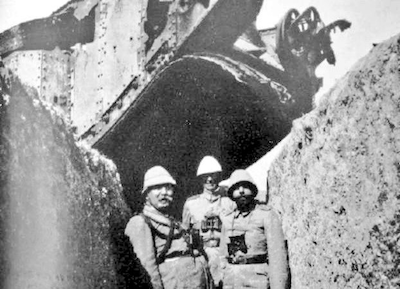
The Sinai-Palestine front generated its own distinctive set of tensions within the alliance. Germany had long viewed an Ottoman offensive toward the Suez Canal as one of the highest-priority operations of the war, the prospect of closing the Canal to British shipping and threatening Egypt held obvious strategic attractions. The first Ottoman attempt to cross the Sinai and attack the Canal, launched on 2 February 1915 under the command of Cemal Pasha with the German Colonel Friedrich Kress von Kressenstein serving as chief of staff, had been repulsed relatively easily by British and imperial forces after a small Ottoman force managed briefly to cross the Canal before being driven back. The logistical difficulties of projecting military power across the 150 miles of Sinai desert had been exposed in stark terms, and the operation had demonstrated that a much more substantial and carefully prepared effort would be required for any serious threat to Egyptian security.
German military planners argued persistently through 1915 and into 1916 for a more systematic and properly resourced second attempt. Kress von Kressenstein worked energetically to build up Ottoman forces in the Sinai, constructing a railway and water pipeline across the desert to sustain a future offensive. But the Ottoman military establishment was simultaneously contending with the Gallipoli crisis, the Caucasian front, and the Mesopotamian theater, and could not concentrate the necessary forces and supplies for a major Sinai offensive. A second, more substantial Ottoman attack on the Canal zone, launched on 3 August 1916 at Romani, was repulsed by British and Anzac forces under General Archibald Murray, ending with an Ottoman retreat that cost Kress von Kressenstein's force around 9,000 casualties. The result was a prolonged strategic stalemate on the Palestinian front that German advisors found deeply frustrating, and it contributed to a growing atmosphere of mutual disappointment that would intensify dramatically in the following years.
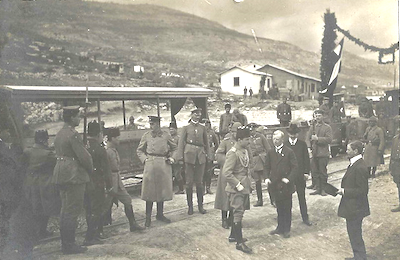
Underlying all of the military and strategic frictions of 1915–16 was a logistical reality that imposed severe limits on what the alliance could actually achieve: the Berlin-Baghdad Railway, the great infrastructural project that was supposed to be the physical spine of the Ottoman-German strategic relationship, remained critically incomplete. The missing sections through the Taurus and Amanus mountain ranges in southern Anatolia, two tunnel systems requiring engineering work on a massive scale, at Pozantı and Islahiye respectively, meant that men, weapons, ammunition, and supplies moving between Europe and the Ottoman fronts had to be unloaded, physically carried over the mountains, and reloaded onto trains on the other side. This bottleneck imposed enormous costs in time, labor, and efficiency, and it meant that the flow of German military materiel into the Ottoman theater was always far below what the strategic situation demanded. The Taurus tunnel section would not be completed until September 1918, just weeks before the armistice, rendering it strategically useless for virtually the entire duration of the war.
The consequences of this logistical dysfunction were felt on every front. Ottoman units frequently fought with inadequate ammunition, insufficient artillery, and without the heavy weapons that might have made the difference in critical engagements. German efforts to expedite construction of the missing railway sections were hampered by labor shortages, the Armenian deportations had, among their many consequences, eliminated a large portion of the skilled Christian labor force that had traditionally worked on the railway, and by the competing demands of the European fronts for engineering resources. The incomplete railway was thus not merely a technical inconvenience but a structural constraint that placed a ceiling on the alliance's military effectiveness throughout the middle years of the war, and it stood as a constant reminder of the gap between the grand strategic visions of August 1914 and the unglamorous material realities of industrial warfare.
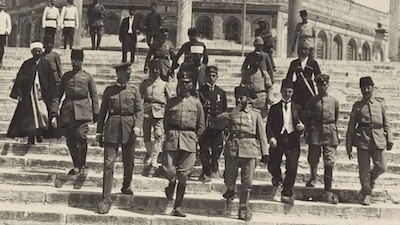
The last major development of this period that bears examination is the outbreak of the Arab Revolt in June 1916, which struck at one of the foundational strategic premises of the Ottoman-German alliance. Sharif Hussein of Mecca, the guardian of Islam's holiest cities, launched his uprising against Ottoman rule on 5 June 1916, firing shots at the Ottoman garrison in Mecca in what became the symbolic opening act of the revolt. Within weeks, Ottoman garrisons across the Hejaz were under attack, and by 10 June the port of Jeddah had fallen to Arab forces supported by British naval gunfire. The revolt, which had been carefully prepared in correspondence between Sharif Hussein and the British High Commissioner in Egypt, Sir Henry McMahon, the Hussein-McMahon correspondence of July 1915 to March 1916, and subsidized by British gold, openly and dramatically repudiated the jihad that the Ottoman Caliph had proclaimed against the Entente barely eighteen months earlier.
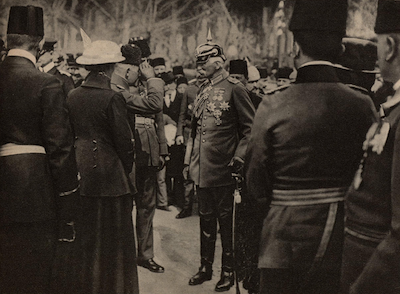
The political damage to the alliance's ideological framework was severe. Germany's investment in the pan-Islamic project, the propaganda, the financing of agents, the diplomatic support for the jihad declaration, had been predicated on the assumption that Ottoman religious authority was a transferable strategic asset. The Arab Revolt demonstrated conclusively that it was not. Arab political identity, already stirring with proto-nationalist sentiment, proved far more powerful than the bonds of religious solidarity that the alliance had hoped to exploit, and British promises of Arab independence, however insincere many of them would prove to be, offered a more compelling vision of political self-determination than the Ottoman imperial framework could provide. For Germany, the revolt was a strategic embarrassment; for the Ottoman state, it was a profound wound, a rebellion in the heartland of Islam led by the custodian of the holy places, broadcast to the world as evidence that the Caliphate's authority had been fatally compromised by the war.
By the close of 1916, the Ottoman-German alliance had survived its most turbulent period to date, but it had done so at enormous cost and in a condition of deepening internal strain. The victory at Gallipoli had demonstrated real military potential, and the success at Kut had provided a genuine morale boost, but these achievements were surrounded on all sides by evidence of structural dysfunction, logistical failure, strategic disagreement, the tragedy of the Armenian deportations, the collapse of the pan-Islamic project, and the pervasive friction of an unequal partnership in which German condescension and Ottoman resentment were becoming impossible to conceal. The alliance had not broken, but it had been tested in ways that revealed, with increasing clarity, that its foundations were far less solid than either party had hoped when they had signed their secret treaty in the summer of 1914. What lay ahead would test those foundations still further.
German Dominance and Ottoman Dependence
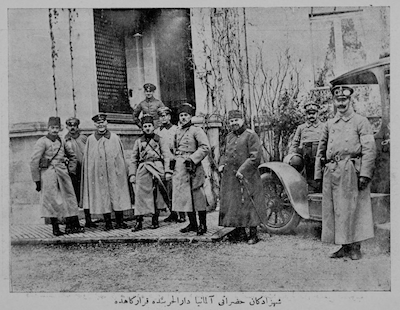
By the time the alliance entered the period spanning late 1916 and 1917, its internal character had undergone a transformation that was as significant as it was, in many respects, inevitable. The early months of the partnership had at least maintained the fiction of equality, two sovereign powers coordinating their war efforts in pursuit of shared objectives, each contributing distinct assets to a common cause. That fiction was now increasingly difficult to sustain. The cumulative weight of military setbacks, financial exhaustion, logistical dependency, and the deepening integration of German personnel into Ottoman command structures had produced a relationship that bore less and less resemblance to an alliance between equal partners and more and more resemblance to a form of sponsored subordination, in which the Ottoman state retained the formal attributes of sovereignty while surrendering, in practice, ever larger portions of its strategic autonomy to its senior partner. This was the period in which German dominance became structural rather than merely situational, and in which Ottoman dependence ceased to be a temporary condition rooted in wartime emergency and hardened into something approaching a permanent feature of the relationship. Understanding how this transformation occurred, through financial mechanisms, military reorganization, command disputes, and the failure of shared ideological projects, is essential to understanding both the alliance's dynamics in its middle years and the seeds of its eventual dissolution.
The financial dimension of the Ottoman-German relationship had always been asymmetric, but by 1916–17 it had reached a point at which Ottoman fiscal independence was, in any meaningful sense, a polite fiction. The empire entered the war with a treasury that was already severely depleted by the costs of the Balkan Wars and the Italian-Ottoman conflict in Libya, and the demands of mobilization and multi-front warfare rapidly exhausted whatever reserves remained. The Ottoman government was simply incapable of financing its own war effort through domestic resources alone, and it had been dependent on German loans from the earliest months of the conflict. As the war extended far beyond the short victorious campaign that both partners had initially anticipated, this dependency deepened with each passing month.
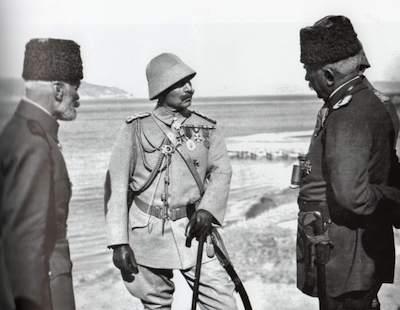
Germany provided a series of substantial financial transfers to Istanbul across the war years, in gold, in credits, and in material support, that kept the Ottoman war economy from complete collapse. A first tranche of five million Turkish lira in gold had been dispatched in October 1914 to tip the Ottoman leadership toward belligerence; subsequent tranches followed at intervals through 1915 and 1916, with total German financial transfers to the Ottoman Empire across the war estimated at around 300 million marks. These transfers were not charity; they were strategic investments designed to keep the Ottomans in the fight, and they came with implicit and explicit conditions that progressively encroached on Ottoman economic decision-making. German financial advisors gained increasing influence over Ottoman budgetary priorities, and the mechanisms through which German loans were disbursed gave Berlin leverage over how Ottoman resources were allocated across the various fronts and military programs. The Ottoman Public Debt Administration, which had long been a symbol of European financial control over the empire, had been suspended at the outbreak of war in August 1914, but the practical effect of German financial dominance was to replace one form of external economic oversight with another, no less intrusive, and arguably more directly tied to immediate military and strategic demands.
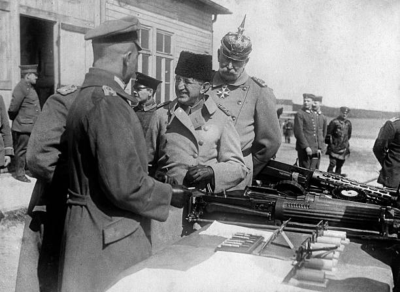
The consequences of this financial dependency extended beyond the purely economic. An empire that cannot finance its own war effort cannot, in any meaningful sense, set its own strategic priorities. The CUP leadership found, with increasing frequency, that German willingness to continue financial support was conditioned, sometimes explicitly, more often implicitly, on Ottoman compliance with German operational preferences. When Enver Pasha or other Ottoman leaders sought to pursue independent strategic initiatives that diverged from German planning, the question of financial leverage was always present in the background, constraining the range of options available. Money, in this alliance as in so many others, was a form of power, and by 1916–17, Germany held that power in overwhelming abundance relative to its partner.
The inflationary consequences of wartime financing were catastrophic for the Ottoman civilian population. The government resorted increasingly to the printing of paper currency from 1915 onward, producing inflation that by 1916 had reduced the purchasing power of urban populations to a fraction of its pre-war level and eroded the living standards of soldiers' families across Anatolia. Requisitioning of food, animals, and transport vehicles, often conducted with little or no compensation under the wartime mobilization laws of August 1914, stripped agricultural communities of the resources they needed to sustain production, contributing to famines that killed hundreds of thousands of civilians in Syria and Lebanon during 1915–18. The human cost of the financial dimension of the alliance was thus borne disproportionately by the Ottoman population, while the strategic benefits accrued primarily to the German war effort.
The most visible and consequential expression of German dominance in the military sphere during this period was the creation and deployment of the Yıldırım, "Lightning", Army Group in the summer of 1917, a joint Ottoman-German force that represented the deepest integration of German command authority into Ottoman operational structures yet achieved. The Yıldırım Army Group was conceived originally as an instrument for a major offensive in Mesopotamia, designed to recapture Baghdad, which had fallen to British forces under General Frederick Maude on 11 March 1917 in a development that sent shockwaves through both partners. The loss of Baghdad was not merely a military setback; it was a profound symbolic blow, depriving the Ottoman Empire of one of the great historic capitals of the Islamic world and demonstrating the continuing vulnerability of Ottoman positions in the east. Maude's famous proclamation to the population of Baghdad on 19 March 1917, presenting the British entry as a liberation rather than a conquest, added a further propaganda sting that the Ottoman government found particularly difficult to absorb.
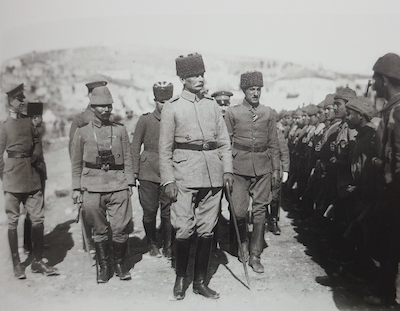
The appointment of Erich von Falkenhayn, the former Chief of the German General Staff who had been relieved of his position in August 1916 following the catastrophic attrition of the Battle of Verdun and the Romanian crisis, to command the Yıldırım Army Group on 7 July 1917 was itself revealing of the alliance's power dynamics. A German general, recently disgraced in his own country's strategic councils, was being given command authority over a major Ottoman operational formation, with the expectation that he would direct Ottoman forces in pursuit of objectives whose priority ordering was itself a matter of fierce dispute between the two allies. Falkenhayn was a capable and intelligent commander, but he arrived in Istanbul in May 1917 with limited knowledge of the specific conditions, terrain, and logistical realities he would face in the Ottoman theater, and with the kind of professional arrogance that German commanders consistently displayed toward their partners.
Almost immediately, the Yıldırım command became the site of bitter strategic disagreement. After touring the fronts in June and July 1917, Falkenhayn assessed the situation and concluded that a Mesopotamian offensive to retake Baghdad was logistically impossible given current Ottoman capabilities, and argued instead that the Army Group should be redeployed to Palestine to prevent a British breakthrough there. Enver Pasha, who had originally championed the Mesopotamian concept and had publicly committed to the recovery of Baghdad, resisted the change in mission strenuously, partly on strategic grounds and partly out of the wounded pride of an Ottoman leader being told by a German general that his army could not accomplish what he had planned for it. The dispute dragged on through August and into September 1917, consuming time and energy that neither the military situation nor the alliance's internal cohesion could afford to waste. It was eventually resolved in Falkenhayn's favor by early October 1917, the Yıldırım Army Group was redirected to Palestine, but the manner of its resolution left deep scars, and the episode became a template for the pattern of German strategic imposition and Ottoman reluctant compliance that would define the alliance's military relationship through its final phase.
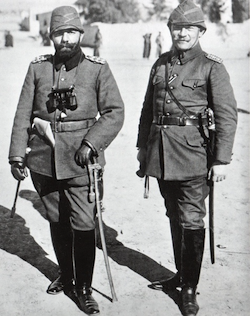
The tensions surrounding the Yıldırım command were symptomatic of a broader and more fundamental dispute over command authority that ran through the entire Ottoman-German military relationship during this period. At the heart of the dispute was a question that neither side could answer satisfactorily without conceding something vital: who, ultimately, was in charge? German officers increasingly held positions of genuine operational authority within the Ottoman military hierarchy, not merely advisory roles but actual command responsibilities over Ottoman troops. By 1917, German officers held senior positions across virtually every major Ottoman front: Falkenhayn in Palestine, Friedrich Kress von Kressenstein commanding the Ottoman Eighth Army, and various German chiefs of staff embedded throughout the Ottoman order of battle. This arrangement made practical sense from a German perspective, given the technical and organizational advantages that German professional military training provided, but it was deeply corrosive of Ottoman military sovereignty and self-respect.
Enver Pasha was acutely sensitive to any German action that he perceived as bypassing or undermining his authority. His relationship with the succession of senior German officers who served in the Ottoman theater, Liman von Sanders, Falkenhayn, and later others, was consistently fraught, oscillating between periods of functional cooperation and episodes of sharp personal and institutional conflict. Enver was not, by temperament or ideology, inclined toward deference, and his pan-Turanian ambitions gave him strategic objectives that frequently diverged from German preferences in ways that made genuine collaborative planning difficult.
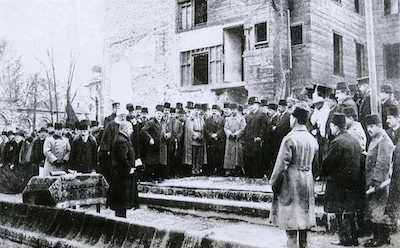
The German commanders, for their part, regarded Enver with a mixture of respect for his energy and intelligence and frustration at what they saw as his strategic recklessness and his tendency to interfere in operational decisions that they believed should be left to professional military judgment. The personal chemistry between Enver and the various German commanders was rarely good, and the institutional chemistry, between the Ottoman General Staff and the German military mission, was equally strained. Reports and memoranda flowing between German officers in Istanbul and the German military command in Berlin during this period are filled with complaints about Ottoman organizational dysfunction, logistical failure, and what German officers perceived as an Ottoman tendency to substitute bold rhetoric for careful planning. These complaints were not always unfair, but they were delivered with a cultural condescension that Ottoman officers found deeply offensive and that poisoned the working relationship at every level.
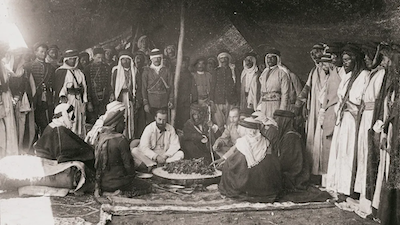
The Arab Revolt, which had erupted in June 1916, continued to impose significant strategic costs on the alliance throughout 1916–17, and its consequences for the Ottoman-German relationship merit closer examination than the bare fact of its occurrence suggests. By the autumn of 1916, Arab forces under the command of Sharif Hussein's son Faisal, with T.E. Lawrence formally attached to the Arab Northern Army from October 1916 onward, had consolidated control over much of the Hejaz and were extending their operations northward. The port of Aqaba, a strategic prize that would open the way for Arab operations into the Sinai and Palestine, fell to a combined Arab and British force on 6 July 1917 following a daring overland assault that completely surprised the Ottoman garrison. Its capture transformed the strategic situation in the region, giving the Arab forces a base from which to threaten the Ottoman right flank in Palestine and to cooperate directly with Allenby's advancing Egyptian Expeditionary Force.
The revolt had, by this period, succeeded in tying down substantial Ottoman forces in the Hejaz, an estimated 25,000 to 30,000 troops, forces that were desperately needed on the Palestine and Mesopotamian fronts. T.E. Lawrence and his Arab irregular forces conducted a sustained campaign of sabotage against the Hejaz Railway, the line connecting Damascus to Medina that was the logistical lifeline of the Ottoman garrisons in Arabia, destroying bridges and cutting the line at multiple points throughout 1917. Germany's response to the Arab Revolt exposed another dimension of the alliance's asymmetric dynamic. From a purely German strategic perspective, the revolt was an Ottoman problem, a consequence of the empire's failure to manage its Arab subjects effectively, and the resources required to suppress it were a drain on the alliance's overall military capacity that Germany could ill afford. German commanders consistently pressured the Ottoman military to resolve the Arabian situation more efficiently, freeing up forces for the fronts they regarded as strategically decisive. Ottoman commanders, facing the reality of guerrilla warfare in extremely difficult terrain against an enemy that enjoyed British gold and weapons, found these demands as frustrating as they were operationally unrealistic.
The British capture of Baghdad on 11 March 1917 deserves particular attention as an event that crystallized many of the alliance's deepest tensions during this period. Baghdad was not merely a city; it was a symbol of enormous weight in Islamic civilization, the seat of the Abbasid Caliphate, one of the great historic centers of Arab and Islamic culture, and a city whose loss the Ottoman government had publicly sworn to prevent at any cost. General Maude's methodical advance up the Tigris, which had begun with the relief of Kut on 23 February 1917, reversing the humiliation of 29 April 1916, and culminated in the crossing of the Diyala River on 10 March and the entry into Baghdad the following day, was publicized triumphantly by London as a demonstration of restored British imperial vigor. For the Ottoman government, it was a humiliation that struck at the heart of its claims to be the defender of Islamic civilization. For Germany, it was a strategic setback that demonstrated the limits of what the alliance had been able to achieve in Mesopotamia despite the victory at Kut the previous year.
The recriminations that followed Baghdad's fall were fierce and revealing. German commanders blamed Ottoman logistical failures and Enver's strategic miscalculations, particularly his insistence on maintaining an overstretched forward position along the Tigris rather than consolidating on more defensible lines, for the inability to mount an effective defense. Ottoman commanders pointed to inadequate German support, the drain of resources to other fronts, and the impossible demands placed on an army that was simultaneously fighting in Palestine, the Caucasus, and Arabia. Both sides were, in different ways, correct, the fall of Baghdad was the product of systemic failures that implicated the alliance as a whole rather than any single party, but the assignment of blame deepened the mutual resentment that was becoming the alliance's most consistent emotional register.
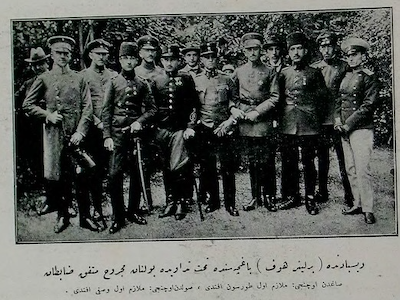
The revolutionary upheaval in Russia in 1917 had profound consequences for the alliance, but consequences that were more double-edged than they might initially appear. The February Revolution of 8–16 March 1917 that overthrew Tsar Nicholas II produced an immediate if temporary relaxation of Russian military pressure on the Caucasian front, as the new Provisional Government struggled to maintain army cohesion. The October Revolution of 7 November 1917 that brought the Bolsheviks to power under Lenin was followed rapidly by an armistice on the eastern front, concluded at Brest-Litovsk on 15 December 1917, and by the opening of formal peace negotiations that would eventually produce the Treaty of Brest-Litovsk on 3 March 1918. The effective removal of Russia from active combat was an enormous relief for the Ottoman Empire, which had been fighting a grinding and costly war in the Caucasian theater since December 1914. It freed substantial Ottoman forces from Caucasian commitments and appeared to open the prospect of territorial expansion into the Caucasus and beyond, exactly the pan-Turanian vision that Enver Pasha had always harbored.
But Russia's collapse also created a new and acute source of tension within the alliance. Germany, focused on its western front and eager to conclude a peace with Russia that would allow maximum redeployment of forces, was primarily interested in the Brest-Litovsk negotiations as an instrument of European strategic calculation. The Ottomans, by contrast, saw Russia's weakness as an opportunity for territorial expansion in the Caucasus, in Armenia, Georgia, and Azerbaijan, that would serve Ottoman national and pan-Turanian ambitions rather than German strategic priorities. The peace negotiations at Brest-Litovsk, which opened formally on 22 December 1917, immediately became an arena of Ottoman-German disagreement as Enver pushed for maximal territorial concessions in the east while the German delegation sought a swift conclusion that would release troops for the western front. As the negotiations unfolded through January and February 1918, the divergence between German and Ottoman objectives in the east would become one of the most acute points of conflict within the alliance, setting the stage for the open disputes over Caucasian policy that would dominate the partnership's final phase. Russia's collapse, in other words, removed one source of military pressure on the Ottoman Empire while simultaneously creating a new arena of Ottoman-German competition and disagreement.
By the close of 1917, the Ottoman-German alliance had settled into a configuration that satisfied neither partner but that neither could easily escape. Germany had achieved, in practical terms, a degree of military and financial dominance over its Ottoman ally that bordered on a protectorate relationship, but this dominance had not translated into the strategic results, a closed Suez Canal, a revolutionized Muslim world, a secured Mesopotamia, that had justified the investment. The Ottomans had gained the financial and military support without which the empire would likely have collapsed far sooner, but at the cost of progressive erosion of their sovereign decision-making and the chronic humiliation of fighting a war in which their own commanders were routinely overruled or bypassed by German officers who regarded them as instruments rather than partners. The alliance persisted not because either side found it satisfying, but because neither could envision surviving the war without it, a logic of mutual entrapment that would carry both powers forward into the final, catastrophic phase of the conflict.
Dissolution and Collapse
The final phase of the Ottoman-German alliance was not so much a story of dramatic rupture as one of progressive disintegration, a slow, grinding unraveling in which the partnership's internal contradictions, long suppressed by military necessity and the mutual fear of defeat, finally overwhelmed whatever remained of cooperative spirit and common purpose. By late 1917, the alliance had already been stripped of most of the optimistic assumptions that had animated it in 1914. The war would not be short, the Muslim world had not risen, Baghdad had fallen, the Arab Revolt continued to bleed Ottoman resources, and the Entente showed no sign of the imminent collapse that German strategic planning had repeatedly anticipated. What remained was a relationship held together not by shared vision or genuine partnership but by the brutal logic of mutual dependency, two powers that had bound their fates together too completely to disentangle themselves without catastrophic consequences, yet whose diverging interests and accumulated grievances made meaningful cooperation increasingly difficult to sustain. The years 1917 and 1918 would test that fragile bond to its absolute limit, and ultimately beyond it.
The collapse of the Ottoman position in Palestine was the most strategically consequential military development of the alliance's final phase, and the manner in which it unfolded illuminated with particular clarity the dysfunctions that had come to characterize the Ottoman-German military relationship. General Edmund Allenby, appointed to command the British Egyptian Expeditionary Force on 27 June 1917 following the failure of General Archibald Murray's two costly and inconclusive assaults on Gaza in March and April of that year, brought to the Palestine theater a combination of organizational thoroughness, logistical sophistication, and operational boldness that the Ottoman-German defense was ultimately unable to match. Allenby spent the summer of 1917 systematically rebuilding his force, extending the Sinai railway and water pipeline forward, and planning an operation that would break the tactical deadlock that had persisted on the Gaza-Beersheba line since early 1917.
His offensive opened on 31 October 1917 with a well executed assault on Beersheba, the eastern anchor of the Ottoman defensive line, in which the Australian Light Horse delivered a celebrated mounted charge that captured the town and its vital water wells before the garrison could destroy them. The fall of Beersheba on that same day unhinged the entire Ottoman position, and Allenby followed up relentlessly. Gaza itself fell on 7 November 1917 after a frontal assault that the now-outflanked Ottoman garrison could no longer sustain, and the entire southern Palestine front began to roll up with a speed and decisiveness that German and Ottoman commanders had not believed possible. Falkenhayn's attempts to establish new defensive lines proved futile in the face of Allenby's sustained pressure, and by late November British forces had crossed the Judean Hills and were approaching Jerusalem from the south and west.
The fall of Jerusalem on 9 December 1917, Allenby famously entering the city on foot through the Jaffa Gate, in deliberate contrast to the Kaiser's ostentatious mounted entry through a specially breached section of the same wall during his visit of October 1898, was an event of enormous symbolic weight. For the British, it was a moment of profound propaganda value, presented to a war-weary public as the liberation of the Holy City just in time for Christmas. The Balfour Declaration of 2 November 1917, issued just weeks before the city's fall and promising British support for a Jewish homeland in Palestine, had already signaled London's intention to reshape the region's future; Jerusalem's capture gave that intention a dramatic military expression. For the Ottoman Empire, it was a catastrophe that struck at the very heart of its claims to Islamic legitimacy and territorial integrity. Jerusalem was not merely a strategically important city; it was one of the most sacred places in the Islamic world, and its loss to a Christian army under British command was a blow from which the Ottoman government's prestige never fully recovered.
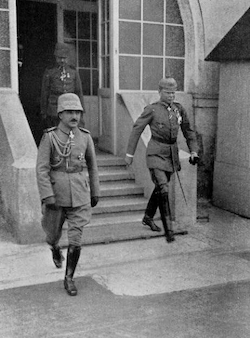
The recriminations between German and Ottoman commanders in the wake of Jerusalem's fall were among the most bitter of the entire war. Falkenhayn's handling of the Palestine defense was subjected to withering criticism from Enver Pasha, who argued that the German commander had mismanaged the battle, failed to concentrate forces effectively at the critical moment, and wasted precious weeks in the dispute over the Yıldırım Army Group's mission when they should have been preparing defensive positions. German officers, for their part, blamed Ottoman logistical failures, the inadequate training of Ottoman infantry, and what they characterized as a persistent inability on the part of Ottoman commanders to execute complex operational plans with the necessary precision and discipline. Both sets of complaints contained genuine elements of truth, but their primary function was not analytical clarity, it was the assignment of blame in a relationship that had long since exhausted its reserves of mutual goodwill. Falkenhayn was subsequently relieved of his command on 26 February 1918 and replaced by Liman von Sanders, who returned to senior command in the Ottoman theater, but the change of personalities could do nothing to address the structural problems that had produced the Palestine disaster.
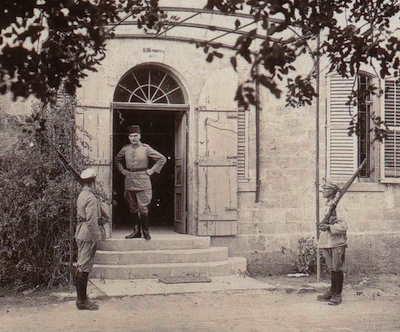
Liman von Sanders assumed command of the Ottoman Army Group in Palestine, now redesignated Yıldırım Army Group F, on 1 March 1918 and immediately set about attempting to stabilize a front that had been shaken by months of defeat. He proved a more effective partner for his Ottoman subordinates than Falkenhayn had been, working with greater cultural sensitivity and establishing a more functional command relationship with officers such as Mustafa Kemal, who briefly commanded the Seventh Army in this period before resigning in June 1918 over continued disagreements with the German command structure. Despite Liman von Sanders's efforts, however, the fundamental deterioration of Ottoman military strength could not be arrested. Allenby's decisive offensive, the Battle of Megiddo, launched on 19 September 1918, shattered the Ottoman-German line in Palestine completely with a devastating combination of infantry assault, cavalry exploitation, and air attack that produced a rout of such totality that organized resistance in the theater effectively ceased within days. Damascus fell on 1 October 1918, Beirut on 8 October, and Aleppo on 25 October. The entire Levant had been lost in the space of five weeks, and with it any remaining possibility of a negotiated outcome that preserved significant Ottoman territorial integrity in the Arab world.
While the Palestine front was collapsing, the alliance was simultaneously being strained to its breaking point by a development in the east that represented perhaps the most naked expression of the divergence between German and Ottoman war aims in the entire conflict. The Treaty of Brest-Litovsk, signed on 3 March 1918, formally ended the war on the eastern front and included provisions, secured largely through Ottoman diplomatic pressure during the negotiations, that returned to the Ottoman Empire the territories of Kars, Ardahan, and Batumi, lost to Russia in the war of 1877–78. This represented a significant territorial recovery that Enver celebrated publicly as a vindication of the alliance strategy. But Enver had no intention of stopping at the Brest-Litovsk line. Almost immediately following the treaty's signing, Ottoman forces of the newly formed Army of Islam, commanded by Enver's brother Nuri Pasha and his uncle Halil Pasha, began advancing deep into Transcaucasia, far beyond any territory that could be justified by the treaty provisions or by legitimate security concerns.
By April 1918, Ottoman forces had occupied Batumi; by mid-April they had taken Kars; and by 15 April they had captured Batum, pushing steadily toward Tbilisi and the heart of the Caucasus. The newly proclaimed Republic of Armenia, established on 28 May 1918 following the collapse of the Transcaucasian Federation, found itself immediately at war with the advancing Ottoman forces, fighting desperate defensive actions at Sardarabad on 21–29 May 1918 that managed to halt the Ottoman advance and preserve a rump Armenian state. Further east, Enver's forces pushed toward Baku, the great oil city on the Caspian Sea, clashing not only with local resistance but increasingly with German strategic interests in the region.
The German reaction to Enver's Caucasian adventure was one of genuine alarm and barely concealed fury. Germany had dispatched its own forces to the Caucasus, the so-called Caucasus Expedition under General Friedrich Freiherr Kress von Kressenstein, arriving in Tbilisi in June 1918, in an attempt to secure Baku and the Georgian railway before Ottoman forces could reach them, producing a bizarre situation in which nominal allies were effectively racing each other to control the same strategic prizes. Germany had concluded a separate treaty with the newly independent Georgian Republic on 28 May 1918, explicitly designed to establish a German sphere of influence in the southern Caucasus that would exclude Ottoman expansion. When Ottoman forces captured Baku on 15 September 1918, the city having been briefly defended by a small British force under General Lionel Dunsterville, the so-called "Dunsterforce," which evacuated by sea on 14 September, the episode represented the high-water mark of Enver's pan-Turanian ambition, achieved in direct competition with German strategic interests rather than in cooperation with them.
The Caucasian episode was, in microcosm, a perfect illustration of everything that had gone wrong with the alliance. Two powers that were nominally fighting the same war were, in practice, pursuing entirely incompatible objectives in the same geographic space. Germany wanted Caucasian resources, above all Baku's oil, to sustain its war economy through what it hoped would be a decisive campaign on the western front in the spring and summer of 1918. Enver wanted Caucasian territory to fulfill an ethnic and imperial vision that had animated his political imagination since before the war. Neither aim was compatible with the other, and neither side had the leverage or the willingness to compel genuine compromise. The episode revealed that by the summer of 1918, the alliance existed primarily on paper, in operational reality, each partner was pursuing its own agenda with diminishing regard for the other's priorities or sensitivities.
The command relationship between German officers and their Ottoman counterparts, never comfortable, reached its nadir during the final phase of the war. Liman von Sanders, back in command in Palestine following Falkenhayn's dismissal, was a more diplomatically sensitive figure than his predecessor and made genuine efforts to work constructively with Ottoman commanders. Yet even he could not prevent the accumulating tensions from breaking into open conflict. Mustafa Kemal's resignation from the command of the Seventh Army in June 1918, motivated in large part by his fury at what he regarded as the subordination of Ottoman military interests to German command preferences and the diversion of resources to Enver's Caucasian adventure, was a symptom of a breakdown in command relations that extended well beyond any individual personality dispute.
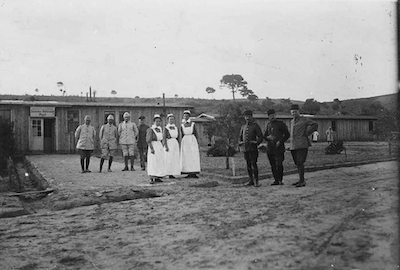
The treatment of Ottoman soldiers during these final years of the war deserves particular attention as a dimension of the alliance's human cost that is often overshadowed by the larger strategic narrative. Ottoman infantrymen had been fighting continuously since November 1914 on multiple fronts, frequently without adequate food, clothing, or medical care. Desertion rates climbed to catastrophic levels, official Ottoman military records suggest that by 1918 the number of men absent without leave may have exceeded 300,000, reflecting not cowardice but the rational calculation of soldiers who had concluded that the state could no longer provide them with the basic means of survival. The situation was aggravated by the catastrophic outbreak of influenza, the so-called Spanish flu, which swept through Ottoman military units from the summer of 1918 onward, killing thousands of already weakened soldiers and further hollowing out formations that were already far below their nominal strength.
German officers observing this disintegration drew conclusions that were, characteristically, more condescending than analytically useful. The tendency of German military reporting during the final phase of the war was to attribute Ottoman military failure primarily to cultural and institutional deficiencies, to what German officers perceived as Ottoman fatalism, organizational incompetence, and lack of professional military culture, rather than to the structural conditions that made adequate performance impossible. This interpretive failure was not merely intellectually dishonest; it was strategically counterproductive, because it led German commanders to propose remedies, more German officers, more German oversight, more German control, that addressed symptoms rather than causes and that further inflamed the Ottoman resentment that was already corroding the alliance's operational effectiveness.
The end came for the Ottoman Empire before it came for Germany. By October 1918, the military situation was irretrievable on every front. Palestine had been lost in the catastrophic rout following the Battle of Megiddo on 19 September, the Arab lands were falling rapidly to Allenby's advancing forces and the Arab armies fighting alongside them, the Mesopotamian front had long since stabilized in British favor following Maude's capture of Baghdad in March 1917, and even the Caucasian gains of Enver's adventure were evaporating as the broader strategic situation collapsed. The CUP government, its leadership recognizing that continued resistance was impossible, took the first step toward ending the war by forcing the resignation of the Grand Vizier Talat Pasha on 8 October 1918. A new government under Ahmed Izzet Pasha opened armistice negotiations with the Entente powers, conducted aboard the British battleship HMS Agamemnon anchored in Mudros harbour on the island of Lemnos.
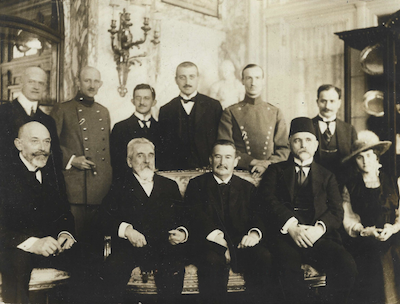
The Armistice of Mudros was signed on 30 October 1918, eleven days before Germany's own armistice on the western front, making the Ottoman Empire the first of the Central Powers to formally exit the war. The terms reflected the totality of Ottoman military defeat. The Straits were to be opened immediately to Entente warships, Allied forces were to be permitted to occupy any strategic point throughout the empire in the event of a threat to Allied security, Ottoman forces were to be demobilized and their weapons surrendered, and the remaining Ottoman garrisons in Arab lands, Yemen, Syria, and Mesopotamia were to capitulate to the nearest Allied commander. It was, in effect, an unconditional surrender dressed in diplomatic language, and it signaled the end of the Ottoman Empire as a sovereign military power. The alliance that had been so secretly and carefully constructed on 2 August 1914 had produced, for the Ottoman side, exactly the outcome it had been designed to prevent: the empire was prostrate before its enemies, its Arab territories lost, its Anatolian heartland exposed to potential partition, and its government discredited beyond recovery.
The final act of the CUP leadership's association with Germany carried a dark symbolic resonance that contemporaries did not fail to notice. On the night of 1–2 November 1918, just days after the Mudros armistice, Enver Pasha, Talat Pasha, and Cemal Pasha, the three men who had led the Ottoman Empire into the war and presided over its catastrophic prosecution, slipped out of Istanbul aboard the German torpedo boat Loreley, provided for the purpose by the German naval command, and transferred at sea to a German submarine that carried them to Sevastopol and ultimately into exile in Germany. They fled leaving behind an empire in ruins, a population exhausted and traumatized by four years of war and mass deportation, and a political vacuum that would take years of further conflict, including the Turkish War of Independence, fought between 1919 and 1923, to resolve. The German vessel that carried them away was, in its grim way, the perfect final image of the alliance: Germany providing the means of escape for the men whose decisions it had enabled, encouraged, and in critical respects engineered, as both empires faced the consequences of a partnership that had served neither as well as either had hoped.
Any account of the dissolution of the Ottoman-German alliance that focuses exclusively on its military and diplomatic dimensions risks obscuring the human catastrophe that its final phase represented for the populations caught within it. The Ottoman civilian population had endured four years of requisitioning, inflation, famine, forced labor, and displacement, conditions that killed hundreds of thousands of people who never appeared in any military casualty list. The Syrian and Lebanese famines of 1915–18, caused by a combination of deliberate Ottoman requisitioning policies, a locust plague that devastated harvests across the Levant in 1915, and the Allied naval blockade that cut off food imports to the Syrian coast, killed an estimated 200,000 to 500,000 people, a demographic catastrophe whose scale has never received the historical attention it deserves. The Armenian deportations, whose principal phase had occurred between April and December 1915 but whose consequences continued to ripple through the empire's social fabric, had eliminated an entire community that had been woven into Ottoman economic and cultural life for centuries.
 For the soldiers of both powers, the final phase of the war was a story of physical and psychological exhaustion that exceeded anything the alliance's architects had contemplated in August 1914. German soldiers in the Ottoman theater, advisors, technical specialists, and combat troops alike, had served in conditions far removed from the relative organizational comfort of the western front, contending with disease, heat, inadequate supply, and the particular psychological strain of operating in a foreign military culture whose language most of them did not speak and whose priorities they often did not share. Ottoman soldiers had endured conditions that were, by any measure, among the worst experienced by any combatant force in the entire war, fighting on multiple fronts simultaneously, with inadequate food, clothing, and medical care, for an empire whose ability to reward their sacrifice was diminishing with every passing month. Total Ottoman military casualties across the war are estimated at approximately 325,000 killed in action, with a further 240,000 dying of disease, figures that do not include the vast numbers who perished from the combined effects of malnutrition, exposure, and the breakdown of medical services in the war's final months.
The German armistice of 11 November 1918 rendered the question of the alliance's future entirely moot. Germany's defeat on the western front, produced by the combined pressure of the Allied Hundred Days Offensive that had opened on 8 August 1918 with the Battle of Amiens, the arrival of American forces in decisive numbers from the spring of 1918 onward, and the internal collapse of German political and military cohesion that culminated in the Kaiser's abdication on 9 November 1918, was a development that the Ottoman leadership had, by the final months of the war, already begun to factor into their calculations. The Ottoman armistice at Mudros had been concluded partly in the recognition that Germany's defeat was only a matter of time, and that concluding a separate peace before the final collapse might marginally improve the empire's negotiating position with the Entente. That calculation proved largely illusory, the Entente's treatment of the defeated Ottoman Empire at the subsequent Paris Peace Conference and in the Treaty of Sèvres of 10 August 1920, which proposed the partition of Anatolia among Greece, Armenia, France, Italy, and a rump Ottoman state, was punitive in the extreme, but it reflected a clear-eyed assessment by at least some Ottoman leaders that the German alliance, whatever it had once promised, had delivered catastrophe rather than salvation.
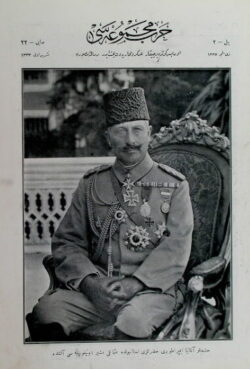
The end of the German Empire and the end of the Ottoman Empire, occurring within weeks of each other in the autumn of 1918, thus brought down the curtain on a partnership that had reshaped the strategic landscape of an entire region while failing, on its own terms, comprehensively and tragically. The alliance had prolonged the Ottoman war effort by years beyond what the empire's own resources could have sustained, in that narrow sense, it had achieved its minimum objective of keeping the Ottomans in the fight. But it had done so at a cost, in lives, in territory, in sovereignty, in moral complicity, and in the empire's long-term viability, that made the prolongation of resistance a curse rather than a benefit. The sick man of Europe, propped up for four years by German gold, German officers, and German strategic ambition, had finally succumbed, not despite the alliance, but in significant measure because of it.
The dissolution of the Ottoman-German alliance was thus not a single event but a process, a gradual, painful, and ultimately irreversible unraveling that traced the arc of both empires' fortunes from the last hopeful months of 1917 through the wreckage of 1918. It ended not with a dramatic diplomatic rupture or a formal denunciation of the treaty obligations that had bound the two powers since 2 August 1914, but with the quiet, ignominious flight of the men who had made it, aboard a vessel of the navy that had, four years earlier, delivered the Goeben to Istanbul as a gift and a promise. Between that promise and that flight lay the full tragedy of the alliance, a tragedy measured not in diplomatic failures or strategic miscalculations alone, but in the millions of lives consumed by a partnership that had always been, at its core, more about the ambitions of its architects than the welfare of the peoples it claimed to serve.

PAGE LAST UPDATED ON 2 MAY 2026