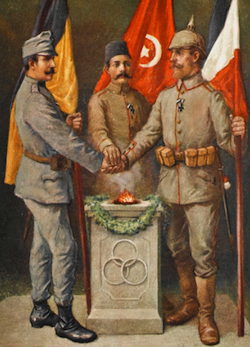
 The presence of German military personnel in the Ottoman Empire during the First World War was one of the most unusual and complex features of the entire conflict, an experiment in coalition warfare that brought together two armies separated by language, culture, military tradition, and vastly different levels of industrial and organizational development. At its peak, the German military presence extended across every dimension of Ottoman military life; from the highest operational command levels down to the technical specialists managing ammunition factories, operating submarines, flying aircraft, and running railway logistics. These men were not merely advisors in the conventional sense of the word. They were, in many cases, the operational backbone of an army that could not have sustained multi-front warfare without them, and yet their presence was simultaneously the source of some of the alliance's deepest and most corrosive tensions.
What makes the story of German officers in the Ottoman Empire historically distinctive is precisely its paradoxical character. The German military presence was both indispensable and deeply resented, welcomed by those Ottoman leaders who understood the empire's material limitations, and bitterly contested by those who experienced German command authority as an affront to Ottoman sovereignty and military honor. Individual German officers ranged from the rigidly arrogant to the genuinely culturally curious, from commanders whose inflexibility made them liabilities in the Ottoman theater to a minority who adapted with remarkable effectiveness to their unfamiliar environment. Their collective experience constitutes a microcosm of the alliance itself, capable of remarkable achievement under specific conditions, yet persistently undermined by cultural incomprehension, institutional friction, and the fundamental impossibility of reconciling two military traditions that had almost nothing in common beyond a shared enemy.
The Scale and Structure of the German Military Presence
The formal German military presence in the Ottoman Empire had its origins in the mission that arrived in Istanbul in December 1913, when the contract signed between the two governments stipulated a complement of 42 officers and specialists. By mid-1914, as the European crisis deepened, this number had already been expanded to 70, with the German government placing no obstacles in the way of officers who wished to serve in Ottoman uniform, effectively treating them as personnel on unpaid leave. The signing of the secret alliance treaty on 2 August 1914 transformed the mission's character entirely. What had been conceived as a reorganization and training program became, almost overnight, the nucleus of an operational command structure for a war the Ottoman Empire was not yet ready to fight. German personnel began flowing into the theater through whatever routes were available, initially overland through Romania and Bulgaria, since the direct Balkan railway connection remained severed until Bulgaria entered the war in October 1915.
The scale of German military involvement grew steadily and significantly as the war progressed and Ottoman vulnerabilities became apparent on multiple fronts simultaneously. By the war's final phase, the German military mission alone, comprising officers, medical personnel, and officials, had reached a total of 800 people. Outside the formal mission structure, a further 190 officers served directly within Ottoman military formations, among them 23 generals and 10 admirals, with 130 assigned to the army and 60 to the navy. This expansion had been facilitated in part by a structural feature of the 1913 military cooperation agreement. German officers entering Ottoman service were automatically promoted one or two ranks above their equivalent German grade, meaning that majors and lieutenant colonels could find themselves commanding divisions, an opportunity entirely unavailable to them on the Western Front, where promotion was governed by strict seniority rules and independent command was the preserve of senior generals. This incentive drew to the Ottoman theater not only ambitious younger officers but also figures like the 72-year-old Field Marshal Colmar von der Goltz, who preferred the prospect of active field command in Mesopotamia to an administrative posting in occupied Belgium.
The motivations that drew German officers to the Ottoman theater were varied, but several structural incentives stand out with particular clarity. The most immediate was the stagnation of the Western Front. By the winter of 1914–15, the war in France and Belgium had settled into the grinding immobility of trench warfare, and the prospects for the kind of rapid promotion and independent field command that ambitious officers craved had effectively disappeared. The Ottoman theater offered something the Western Front could not, i.e. the possibility of commanding formations far above one's nominal rank, operating in a genuinely fluid strategic environment, and acquiring the kind of combat experience that could distinguish a career. Under the terms of the 1913 military cooperation agreement, even a major or lieutenant colonel could find himself commanding a division in Ottoman service, an opportunity that would have been inconceivable within the rigid hierarchies of the German army in France. The German High Command, for its part, facilitated this flow by treating officers who volunteered for Ottoman service as being on a form of unpaid leave, placing no institutional obstacles in the way of those who wished to go.
Beyond career calculation, however, many German officers arrived in the Ottoman theater carrying a set of cultural expectations that owed more to romantic orientalism than to operational reality. Their knowledge of the East, as one contemporary observed, derived largely from the Arabian Nights, exotic travel literature, and biblical narratives, a mental landscape utterly remote from the physical hardships, logistical dysfunction, and cultural complexity they would actually encounter. The German General Staff did nothing to correct this; it provided no systematic orientation training, no specialized briefing materials, and no cultural preparation for officers posted to Istanbul. Those who could not obtain information from colleagues already serving at the Ottoman High Command headquarters were left to discover the realities of the theater entirely through their own experience in the field. This absence of institutional preparation would prove a recurring source of difficulty, generating misunderstandings, false assumptions, and operational miscalculations that no amount of individual competence could entirely overcome.
Senior German Officers and Their Roles
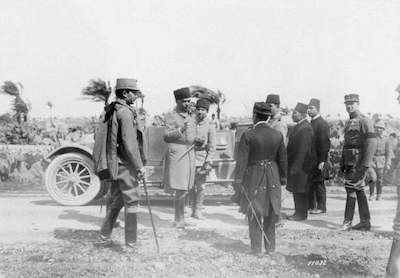
The German officers who held senior positions in the Ottoman theater formed a remarkably diverse group in terms of temperament, professional background, and operational effectiveness, yet they shared the common experience of commanding in an environment for which neither their training nor their institutional culture had adequately prepared them. The most consequential and longest-serving figure was Otto Liman von Sanders, who arrived in Istanbul on 12 December 1913 as head of the German Military Mission and remained in the Ottoman theater until the armistice of October 1918, a span of nearly five years that made him, in institutional terms, the central German figure of the entire alliance. His appointment to command the Ottoman Fifth Army on 24 March 1915, following the failure of the Allied naval assault on the Dardanelles, placed him at the helm of the campaign that would become the alliance's most celebrated military achievement. Liman von Sanders was a capable and professionally serious commander whose rapid redeployment of reserves on the night of the Allied landings demonstrated genuine operational skill, but his personality made him a deeply divisive presence. He submitted his resignation on more than one occasion over disputes with Enver Pasha, clashed repeatedly with Mustafa Kemal over operational decisions at Gallipoli, and was regarded by the German High Command as having exaggerated Enver's influence and power in his reporting, a distortion that, in Liman von Sanders's own later assessment, had led Berlin to pursue a dangerously personalized policy toward the Ottoman Empire. His eventual return to senior command as head of Yıldırım Army Group F in Palestine from 1 March 1918, following Falkenhayn's dismissal, demonstrated a more culturally sensitive approach than his predecessor had managed, though the military situation by that point was too far gone for improved personal relationships to make a decisive strategic difference.
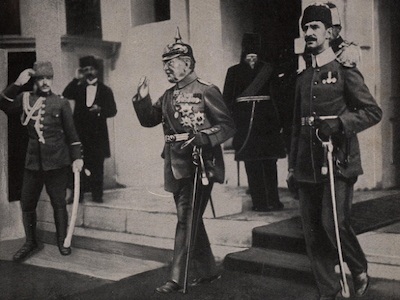
Colmar von der Goltz occupied a unique position among senior German officers in the Ottoman theater by virtue of his decades-long prior engagement with the Ottoman military establishment. He had first served as head of the German Military Mission between 1883 and 1895, and his return to Ottoman service in October 1915 as commander of the Sixth Army in Mesopotamia was greeted with genuine warmth on the Ottoman side, he was known and respected as "Goltz Pasha" in a way that more recently arrived German commanders never were. His approach to Ottoman military culture was more patient and more genuinely curious than that of most of his contemporaries, and he represented, in the view of those who worked with him, the closest approximation to what a truly effective Ottoman-German military partnership might have looked like. His death from typhus in Baghdad on 19 April 1916, just days before the surrender of the British garrison at Kut, the greatest Ottoman military success of the Mesopotamian campaign, deprived the alliance of its most experienced and culturally attuned senior figure at a moment of genuine strategic opportunity. His body was subsequently transported to Istanbul and reinterred on 28 April 1916 in the garden of the German Embassy at Tarabya, where his gravestone bore both a cross and an Ottoman crescent, a symbolic conjunction that contemporaries noted as an apt emblem of the alliance he had served.
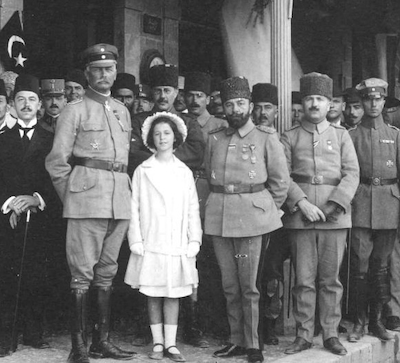
Erich von Falkenhayn, appointed to command the Yıldırım Army Group on 7 July 1917, represented in many respects the antithesis of von der Goltz's approach. Arriving in Istanbul in May 1917 in the wake of his relief from the German Chief of General Staff position following the catastrophic attrition of Verdun and the Romanian crisis of 1916, Falkenhayn brought to the Ottoman theater the professional arrogance and cultural insularity that characterized the worst tendencies of German commanders in this environment. His assessment of the military situation after touring the fronts in June and July 1917, that a Mesopotamian offensive to retake Baghdad was logistically impossible and that the Army Group should be redirected to Palestine, was professionally sound, but his manner of imposing this conclusion on a reluctant Enver Pasha, and his subsequent handling of the Palestine defense, generated bitter recriminations that poisoned the command relationship at precisely the moment when coherent Ottoman-German cooperation was most urgently needed. His relief on 26 February 1918, following the fall of Jerusalem and the collapse of the southern Palestine front, was the most visible single casualty of the alliance's command dysfunction. Friedrich Kress von Kressenstein, by contrast, represented the most operationally effective German commander in the entire Ottoman theater, an officer who had spent years working alongside Ottoman forces in the Sinai campaigns and had developed a genuine and functional working relationship with his Ottoman subordinates. His victories at the First and Second Battles of Gaza demonstrated what German operational leadership could achieve when it was accompanied by genuine respect for Ottoman military capacity and genuine understanding of the theater's specific conditions. His command of the Ottoman Eighth Army in the Palestine campaign of 1917–18, though ultimately unsuccessful against Allenby's overwhelming force, was conducted with a professionalism and a collaborative spirit that stood in marked contrast to the dysfunction surrounding the Yıldırım headquarters.
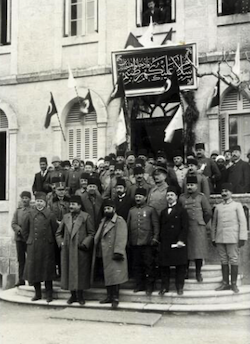
Among the less celebrated but operationally significant German figures, Friedrich Bronsart von Schellendorf served as chief of the Ottoman General Staff from 1914 to 1917 and was the key German figure in day-to-day strategic coordination with Ottoman command, the officer who, working with Enver Pasha and Lieutenant Colonel Hafız Hakkı Pasha, jointly designed the operational plans for both the Caucasus offensive and the first Sinai Canal operation, making him the principal German architect of the alliance's two most ambitious early campaigns.
Hans von Seeckt, who served as the last German chief of the Ottoman General Staff from 1917 to 1918 before going on to become the architect of the post-war Reichswehr, approached the Ottoman theater with considerably more analytical detachment than most of his colleagues, producing assessments of Ottoman military capacity and the structural problems of the alliance that were among the most lucid generated by any German officer in the theater.
At the specialist level, German Lieutenant Erich Serno, eventually promoted to major in Ottoman service, commanded the entire Ottoman air force, overseeing 150 pilots and observers alongside 250 mechanics and technicians operating across the Gallipoli, Palestine, and Iraq fronts, of whom 34 were killed in action. The breadth of Serno's responsibilities, extending from combat operations to logistics, training, and aircraft maintenance across multiple distant fronts, illustrated the extraordinary degree to which German specialist officers had become not merely advisors but the operational managers of entire branches of the Ottoman military establishment.
Gallipoli as a Mirror of the Alliance
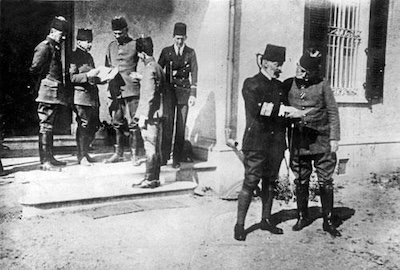
The Gallipoli campaign of 1915 offers the most thoroughly documented and analytically revealing case study of how German and Ottoman military personnel actually functioned, and malfunctioned, in operational partnership, and it repays close examination precisely because it produced, simultaneously, the alliance's greatest military success and some of its most revealing internal tensions. The defensive preparations for a potential assault on the Dardanelles had begun as early as September 1914, when German Admirals Usedom and Merten were given responsibility for fortifying the Straits. The two officers went considerably beyond simply repairing the existing decrepit fortifications; working alongside General Weber, the Inspector General of Fortifications, they oversaw the construction of new earthwork batteries and supervised the laying of multiple minefield lines across the Narrows. Admiral Usedom personally directed the minelaying operations that would prove decisive in defeating the Allied naval assault of 18 March 1915, when three Allied battleships were sunk and three others seriously damaged, a result that owed as much to German naval engineering as to Ottoman gunnery. The weeks between the naval failure and the amphibious landings of 25 April gave the defenders critical time to reinforce their positions, and it was during this interval that Liman von Sanders was appointed on 24 March 1915 to command the newly formed Ottoman Fifth Army, inheriting a defensive infrastructure that German naval officers had done much to create.
The command structure that Liman von Sanders built for the Gallipoli defense illustrated both the depth of German military integration into the Ottoman order of battle and the specific ways in which that integration created operational tensions alongside its undeniable contributions. His army-level staff was composed entirely of Ottoman officers, a deliberate arrangement that maintained the formal appearance of Ottoman command sovereignty, but the reality at formation level was considerably more German. In the Anafarta Group, a heavy artillery commander, a corps commander, and a divisional commander were all German officers; the Northern Group's chief of staff was German; and in the Southern Group, a corps commander, another corps' chief of staff, and a divisional commander were likewise German. The artillery command underwent a progressive Germanization as the campaign intensified. Heavy artillery units were placed under German Colonel Wehrle in the summer of 1915, and by September all artillery formations had been transferred to German Colonel Grossmann, brought directly from the Western Front. In June 1915, at Liman von Sanders' personal request, approximately 200 trained combat pioneer engineers were dispatched individually by different routes to reinforce the Southern Group, accompanied by a machine gun company from the German Mediterranean naval squadron, most of whom perished within weeks from the combination of unfamiliar climate, inadequate nutrition, and the ferocity of the fighting. At the peak of the campaign, the total number of German military personnel on the Gallipoli Peninsula reached approximately 500, making it the single largest concentration of German military presence in any Ottoman theater of operations.
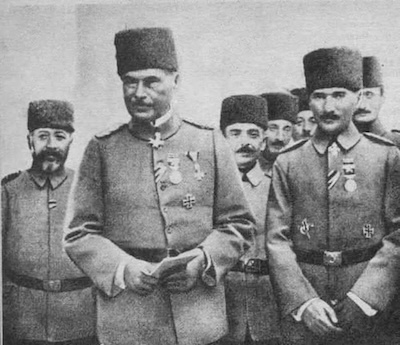
It was within this command structure that the campaign's most celebrated and most revealing personal conflict unfolded, the relationship between Liman von Sanders and Lieutenant Colonel Mustafa Kemal, commanding the 19th Division. Mustafa Kemal was contemptuous of German command authority from the outset, and the friction between the two men began almost immediately after the Allied landings of 25 April. On that day, Mustafa Kemal famously exceeded his orders by committing his entire division to the defense of the heights above Anzac Cove without waiting for authorization from army headquarters, a decision that violated the formal chain of command but proved militarily decisive in halting the Allied advance at its most critical moment. His order to his troops that they should not merely fight but die in order to give reinforcements time to arrive became the defining legend of Ottoman military valor at Gallipoli, and it was issued in direct defiance of the cautious operational logic that German command doctrine would have prescribed. The tension between Kemal and Liman von Sanders recurred throughout the campaign; at Conkbayırı (Chunuk Bair) in August 1915, during the renewed Allied offensive associated with the Suvla Bay landings, Mustafa Kemal again acted with an independence that his German superior found professionally problematic even as its results were operationally invaluable. The relationship between the two men encapsulated, in the most concentrated form available anywhere in the alliance, the central paradox of Ottoman-German military cooperation. The German command framework provided the organizational structure and the technical resources within which the defense was conducted, but the decisive human factor, the inspired tactical leadership and the willingness to accept catastrophic casualties in defense of ground, was Ottoman, and it operated most effectively precisely when it was least constrained by German command authority.
The logistical dimension of the German contribution at Gallipoli was equally significant, if considerably less celebrated. In Istanbul, German officers took over the management of the city's ammunition-producing factories in May 1915, overseeing a workforce of hundreds that included not only military officers but civilian engineers, chemists, foremen, and industrial workers, the entire munitions supply for the Fifth Army fighting on the peninsula flowed through this German-run industrial complex. Their operation was a microcosm of the alliance's material character; a German-managed enterprise embedded within the Ottoman capital, sustaining an Ottoman army in the field through German organizational capacity and technical expertise. Without this supply infrastructure, the Fifth Army's ability to sustain its defensive effort against the Allied landings would have been severely compromised. The Gallipoli campaign thus illustrates with particular clarity what the Ottoman-German military partnership actually looked like in operational practice; not a relationship between equal contributors pursuing a common vision, but a layered and deeply asymmetric structure in which German personnel provided the technical expertise, the command frameworks, the logistical management, and the material supply that made sustained Ottoman resistance possible, while Ottoman soldiers provided the manpower, the endurance, and, in figures like Mustafa Kemal, the inspired tactical leadership that ultimately determined the outcome.
The Language Barrier
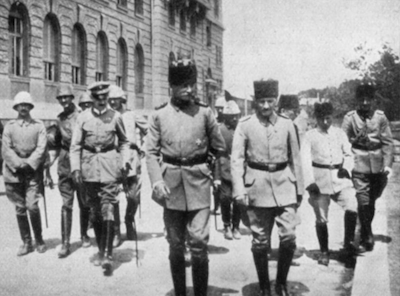
Of all the practical obstacles that beset the Ottoman-German military partnership, none was more pervasive or more consistently damaging than the language barrier. German officers who spoke Turkish and Ottoman officers who spoke German were a small minority on both sides, which meant that virtually all communication between the two military cultures passed through interpreters, a filter that introduced distortion, delay, and misunderstanding into every level of the command process. Translation errors were endemic, and their consequences ranged from minor operational inconveniences to serious miscalculations that affected the outcome of engagements. Orders carefully formulated by German commanders in the precise, unambiguous language of Prussian military doctrine frequently arrived at their Ottoman destinations subtly altered in meaning, sometimes through genuine linguistic difficulty, sometimes, it was alleged, through deliberate manipulation by interpreters who had their own loyalties and agendas. There were documented cases of interpreters knowingly mistranslating what German commanders said, a phenomenon that reflected not merely linguistic incompetence but the deeper political tensions that ran through the alliance at every level.
The consequences of this communication breakdown extended far beyond the mechanics of individual orders. Because Ottoman subordinates frequently could not communicate directly with their German superiors, they developed a characteristic pattern of response to instructions they found objectionable or impractical. Rather than openly refusing or arguing, they would appear to comply while quietly doing nothing, withholding information that might have altered the German commander's decision, or executing orders in a superficial manner that satisfied their formal obligations while subverting their intent. German officers, encountering this behavior and unable to diagnose its causes accurately, typically interpreted it as evidence of Ottoman incompetence, lack of initiative, or indifference to professional military standards, conclusions that deepened their condescension and further alienated their Ottoman colleagues, producing a self-reinforcing cycle of mutual frustration and dysfunction. The language barrier was thus not merely a technical inconvenience but a structural mechanism through which the cultural incomprehension at the heart of the alliance was continuously reproduced and intensified at the operational level.
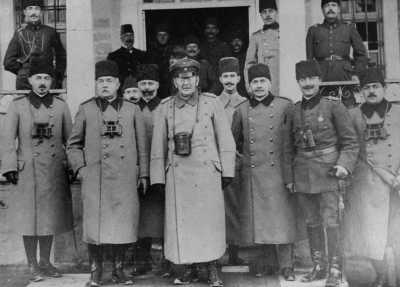
Not all German officers in the Ottoman theater fell into the pattern of condescension and cultural incomprehension that characterized the majority of their colleagues. A distinct minority, labeled by the German High Command with the dismissive term vertürkt, meaning "Turkified", had adapted sufficiently to Ottoman military culture and social norms to develop genuinely effective working relationships with their Ottoman counterparts. What "Turkification" meant in practice was relatively straightforward. These were officers who had learned to temper the characteristically blunt and hierarchical style of German military command, who took account of Ottoman cultural values and social conventions when dealing with subordinates and colleagues, who recognized Ottoman soldiers as partners rather than instruments, and who understood that the operational methods appropriate to the Western Front could not simply be transplanted wholesale into the Anatolian and Arab theaters. Among the officers most associated with this approach were Kress von Kressenstein, whose years of working alongside Ottoman forces in the Sinai had given him an unmatched understanding of their capabilities and limitations; Hans Guhr on the Caucasian front; Franz von Papen, who served as chief of staff of the Yıldırım Army Group; Erich Serno, the commander of the Ottoman air force; and the veteran Colmar von der Goltz, who despite occasional exasperation with Ottoman administrative habits consistently treated his Ottoman colleagues with a degree of respect unusual among his peers.
What most clearly set a small group of German officers apart from their peers was their willingness to engage seriously with their Ottoman counterparts, making an effort to understand their political priorities, cultural norms, historical experiences, and sensitivities as a sovereign military partner; by contrast, the broader failure of the German military presence in the Ottoman theater stemmed in large part from the absence of such efforts among the majority of officers, many of whom showed limited regard for the perspectives of their allies. The institutional reaction to those who did develop this deeper familiarity was revealing. Rather than being valued, these “Turkified” officers were often viewed with suspicion by the German High Command, which saw them as having compromised their professional standards. Liman von Sanders removed officers from Gallipoli whom he considered overly accommodating to Ottoman practices, while Erich von Falkenhayn refused to appoint any officer labeled vertürkt to the Yıldırım Army Group staff; in hindsight, the marginalization of precisely those officers who had acquired the cultural competence most needed for an effective alliance stands out as one of the more self-defeating institutional choices of the partnership.
The Frictions of Dual Command
The question of who ultimately held command authority over Ottoman forces in which German officers served was never satisfactorily resolved throughout the entire duration of the war, and the ambiguity this created generated friction at every level of the military hierarchy. The contractual arrangement under which German officers received automatic promotion of one or two ranks upon entering Ottoman service, designed to give them sufficient authority to function effectively, produced its own resentments, since Ottoman officers frequently found themselves subordinated to German counterparts whose nominal rank in their own army was considerably inferior to their own. This structural indignity was compounded by the broader question of operational sovereignty; whether orders issued by German officers in Ottoman uniform derived their authority from Istanbul or from Berlin was a question that haunted the alliance throughout the war. In the early months, when the novelty of the partnership and the excitement of initial operations kept underlying tensions submerged, the ambiguity was manageable. But from the middle of 1916 onward, as military setbacks accumulated and the human costs of the war became impossible to ignore, Ottoman officers began asking openly, first in whispers, then in increasingly vocal protests, why it was German rather than Ottoman professional judgment that consistently prevailed in operational decisions affecting Ottoman soldiers on Ottoman territory.
Specific episodes illustrated the dysfunction with particular clarity. The dispute over the Yıldırım Army Group's mission in the autumn of 1917, in which Falkenhayn's insistence on redirecting the force from Mesopotamia to Palestine overrode Enver Pasha's strategic preferences through weeks of acrimonious negotiation, was perhaps the most visible example of German strategic imposition at the senior command level, but it was replicated in countless smaller confrontations throughout the theater. At Gallipoli, Mustafa Kemal's repeated clashes with Liman von Sanders over operational decisions, clashes in which Mustafa Kemal acted on his own initiative in ways that technically violated his orders but proved militarily decisive, encapsulated the tension between German command authority and Ottoman operational judgment in its most dramatic form. In the Sinai campaigns, Kress von Kressenstein documented the pattern of mutual recrimination that followed operational setbacks, in which German officers attributed failure to Ottoman organizational incapacity while Ottoman officers pointed to German strategic miscalculation and inadequate support. In Mesopotamia, the relationship between German advisors and Ottoman commanders was complicated further by the presence of Khalil Pasha, who conducted the siege of Kut with considerable operational skill but was persistently dismissive of German counsel, a posture that German officers found deeply frustrating but were institutionally ill-equipped to address, since the formal mechanisms for enforcing German command preferences over a resistant Ottoman general were never clearly defined.
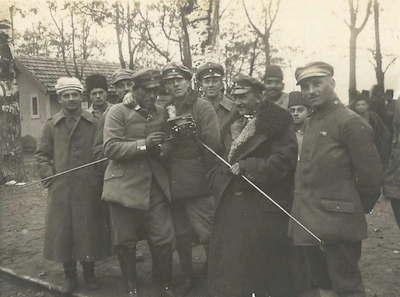
The day-to-day experience of dual command produced a characteristic and self-reinforcing cycle of dysfunction that went beyond individual personality conflicts to reflect something structural about the incompatibility of the two military cultures. When Ottoman subordinates received orders from German superiors that they found impractical, culturally inappropriate, or professionally objectionable, they rarely refused openly, open refusal would have constituted an actionable breach of military discipline. Instead they adopted a posture of passive resistance, appearing to comply while quietly delaying execution, withholding information that might have altered the German commander's decision, sending incomplete reports, or implementing orders in ways that technically satisfied their formal obligations while subverting their practical intent. German commanders, encountering this behavior and unable to diagnose its causes accurately, partly because of the language barrier, partly because of their own cultural assumptions, typically interpreted it as evidence of Ottoman incompetence, fatalism, or indifference to professional military standards. This interpretation deepened their condescension, which further alienated their Ottoman colleagues, which intensified the passive resistance, which produced more condescension, a closed circuit of mutual frustration from which neither side had the institutional tools or the cultural willingness to escape. The German military establishment's consistent response to this cycle was to propose more German officers, more German oversight, and more German control, remedies that addressed the symptoms of Ottoman resentment while actively intensifying its causes.
Technical and Logistical Roles Beyond the Battlefield
The military contribution of German officers and specialists in the Ottoman theater extended far beyond the conventional battlefield into a wide range of technical and logistical domains that were, in many respects, equally critical to the sustainability of the Ottoman war effort. Germany assumed operational control of the Ottoman air force almost in its entirety, with German Lieutenant Erich Serno, eventually promoted to major in Ottoman service, taking personal responsibility for every aspect of its administration and operation. Under his direction, 150 German pilots and observers alongside 250 mechanics and technicians served across the Gallipoli, Palestine, and Iraq fronts, of whom 34 were killed in action during the course of the war. At sea, the German naval presence went well beyond the Goeben and Breslau. German submarines operating in the Dardanelles and the Black Sea were crewed and commanded entirely by German naval personnel throughout the war, representing a dimension of German military involvement that has received less historical attention than the land campaigns but that was strategically significant in maintaining pressure on Russian Black Sea communications. Germany also assumed primary responsibility for wireless communications, railway logistics, road transport by motor vehicle, and medical services, domains in which Ottoman technical capacity was deemed insufficient and which German personnel therefore took over and ran largely independently of Ottoman institutional oversight.
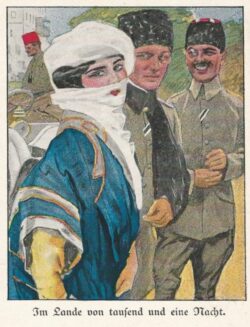
The personal experience of German officers serving in the Ottoman theater was, for the great majority, a story of progressive disillusionment. Most had arrived carrying the orientalist assumptions of their generation, a mental landscape shaped by romantic travel literature, biblical imagery, and the exotic narratives of One Thousand and One Nights, and the collision between these expectations and the physical realities of the Ottoman theater was often severe. The climate, the terrain, the food, the disease environment, and the logistical deprivation of the Ottoman fronts were qualitatively different from anything the Western Front had prepared them for, and the German General Staff had done nothing to ready them for what they would find. Officers who could not obtain informal briefings from colleagues already in the theater arrived essentially ignorant of the conditions they would face, and many found that the gap between their professional assumptions and operational reality was simply too wide to bridge. Disease was a constant and lethal presence; malaria, typhus, dysentery, and cholera killed German personnel at every rank throughout the war, claiming victims as senior as Field Marshal von der Goltz himself, who died of typhus in Baghdad. The 34 German pilots killed in action over the Ottoman fronts, the pioneer engineers who perished within weeks of arriving at Gallipoli, and the countless specialists who succumbed to illness in the Syrian and Mesopotamian heat represented a human cost that was rarely acknowledged in the official narratives of either partner.
Beyond the physical hardships, many German officers experienced a particular kind of psychological strain that was specific to their position as foreign commanders in an alien military culture, the strain of operating without the institutional support structures, the shared professional assumptions, and the common language that made command in the German army a coherent and predictable activity. Those who adapted, who learned enough Turkish to communicate directly with their subordinates, who took the time to understand the cultural logic behind behaviors that initially appeared as mere obstruction or incompetence, generally found their service more professionally rewarding and operationally effective, but they were a minority, and the institutional culture around them consistently discouraged rather than rewarded such adaptation. The majority returned home, if they returned at all, with what contemporaries described as a deep disillusionment, not only with the Ottoman alliance and its results, but with the distance between what the experience had promised and what it had actually delivered. The German veterans of the Ottoman theater, known as the Asienkaempfer or Asia Warriors, published memoirs and articles in the decades after the war that collectively constituted an important if incomplete record of the alliance's human dimension, a record that effectively disappeared from German public consciousness as that generation died out, leaving the shared experience of the Ottoman fronts as one of the more thoroughly forgotten chapters of the First World War.

The story of German officers in the Ottoman Empire during the First World War resists reduction to either of the simplified narratives that have dominated the historiography of the alliance in both countries. It was neither the story of selfless German military expertise generously placed at the service of a struggling ally, nor the story of cynical German manipulation of an empire too weak to resist. It was something considerably more complex and more humanly interesting than either version allows; the story of several hundred men from one military culture attempting, with varying degrees of skill, goodwill, and self-awareness, to function effectively within a military institution that operated according to entirely different assumptions about command, hierarchy, professional obligation, and the relationship between soldier and state. The structural conditions of the alliance, the automatic promotion system, the language barrier, the absence of cultural preparation, the unresolved question of command authority, and the German High Command's systematic marginalization of precisely those officers who had developed genuine cross-cultural competence, made genuine partnership extraordinarily difficult to achieve and easy to undermine.
What the German officer experience in the Ottoman theater ultimately reveals is the degree to which the alliance's military effectiveness was constrained not primarily by the shortage of German expertise or Ottoman manpower, but by the failure of institutional imagination on both sides. The German military establishment sent its officers to the Ottoman theater without equipping them to understand what they would find there, rewarded those who imposed German military culture on their Ottoman hosts, and punished those who adapted to local realities, producing a command environment in which condescension was mistaken for competence and cultural rigidity for professional standards. The Ottoman side, for its part, was caught between the genuine need for German technical and organizational support and the legitimate pride of a sovereign military power that resented being treated as a dependent. The individual German officers who navigated this contradiction most successfully, the vertürkt minority who grasped that effective coalition warfare required genuine respect for one's partner, pointed toward a model of alliance management that the institutional cultures of neither power was ultimately willing to adopt. Their marginalization was, in its way, the most eloquent commentary on why the Ottoman-German alliance, for all its occasional military achievements, never became the coherent strategic partnership that its architects had envisioned in the summer of 1914.

PAGE LAST UPDATED ON 2 MAY 2026