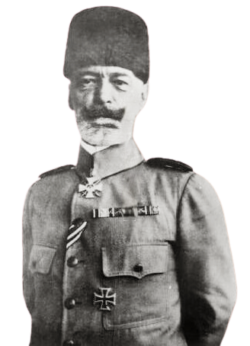
 Johannes Merten (1857–1926) was a German naval officer who later served in the Ottoman Empire during the First World War, playing a key role in the defense of the strategically vital Dardanelles. Born in Sprauden in the Marienwerder district (near present-day Kwidzyn in northern Poland), he entered the Imperial German Navy in 1875 and built a long career marked by both seafaring command and administrative leadership.
During his early and mid-career in the Kaiserliche Marine, Merten commanded several vessels, including the gunboat Albatross and the survey ship Möwe, the latter deployed in Germany’s Pacific colonial territories. He later held important artillery and command positions, leading marine artillery units and commanding major cruisers such as Victoria Louise and Friedrich Carl. Rising steadily through the ranks, he was promoted to rear admiral in 1908 and served in senior roles including inspector of naval formations and fortress commander of Wilhelmshaven. He was granted the rank of vice admiral in 1910, shortly before retiring from active German service.
With the outbreak of the First World War, Merten was recalled to duty and assigned to the Ottoman Empire as part of Germany’s military support mission. There, he was appointed commander of the Dardanelles fortifications and played an active role in their defense during the Gallipoli Campaign. In recognition of his service, he formally received the rank of vice admiral in 1916, while the Ottoman Empire conferred upon him the title of general of artillery.
Following the end of the war, Merten retired permanently from military life. His legacy is primarily associated with his technical and military contributions to naval and coastal defense during a critical phase of the war.
